
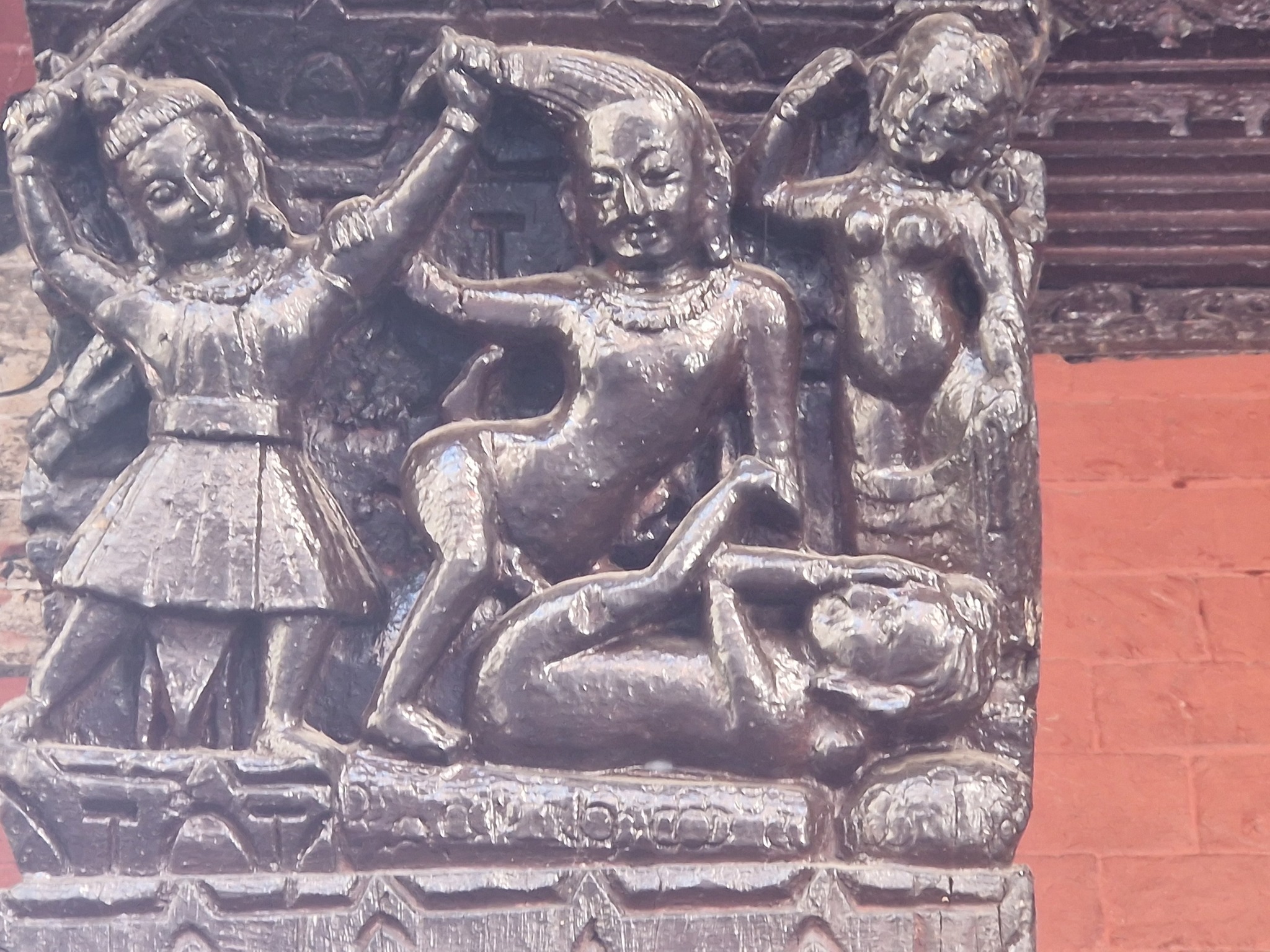
In many non-Western cultures, especially across South Asia and the Himalayan region, gender is not simply a social construct—it is a natural, involuntary development that unfolds over time through the body’s evolving signs, or “lingas.”
At birth, the only visible marking that distinguishes a newborn is the sexual organ. In Sanskrit and many Indic languages, this is called “linga”, meaning mark, symbol, or representation. Based on this primary ‘linga’, a child is recognized as female, male, or intersex. However, crucially, our cultures do not say “a man is born” or “a woman is born” or even “a third-gender person is born.” Rather, a child is born—not yet a gendered person.
As the child grows and enters puberty, their body naturally develops additional ‘lingas’—such as breasts or a deeper voice, facial hair, muscles or menstruation, and other biological or physiological features. These markers collectively define the person’s gender identity, not at birth but over time, in rhythm with nature and age.
In this understanding, gender is not socially assigned at birth but organically realized through life. A person becomes gendered through this natural evolution: we recognize them as a person of feminine nature, masculine nature, or third nature—in other words, a woman, man, or third-gender person.
Once this natural gendered being is formed, society then responds to that gender identity. Here, gender roles enter the picture. These roles—what a third-gender person should or shouldn’t do, what a woman should wear, how a man should behave—are indeed social constructs. Societal expectations vary widely: one culture may prescribe burkas, another allows bikinis. These roles are imposed after nature has already formed a person’s gender.
But today, under the dominant influence of Western gender theory, a major reversal has occurred: gender is seen as something entirely constructed by society and therefore believed to be alterable or fluid, even from early childhood. According to this view, if gender is merely constructed, it can be deconstructed and reassigned, often through medical and psychological interventions.
This model poses a serious problem: it collapses the distinction between gender identity and gender roles, and it overrides the embodied, natural, and time-dependent formation of gender that is honored in many traditional societies.
In most binary patriarchal societies, including those heavily influenced by Western thinking, third genders and non-binary categories are often erased or only conditionally accepted—usually after medical transition from male to female or vice versa. These frameworks make little space for non-transitioning trans identities, intersex realities, or evolving gendered beings.
In contrast, our indigenous traditions did not require people to become “men” or “women” to be respected. One could simply be—as one is, with dignity, integrity, and recognition.
Conclusion: Reclaiming a More Organic Understanding of Gender
What the West calls “gender” is not simply a product of social forces. In many of our cultures, gender is an unfolding natural phenomenon, rooted in biological, physiological, emotional, and spiritual signs that emerge over time.
Yes, gender roles—social expectations tied to gender—are constructed. But gender itself is not. It is a layered, evolving identity formed through a body’s markings, lived experience, and inner nature.
By returning to our own philosophical traditions and cultural insights, we can resist the colonial imposition of rigid binaries and reaffirm the complex and dignified diversity of human gender experience.

Copyright © All right reserved to pahichan.com Site By: Sobij.
