
When most people think of the gym, they imagine sweat, muscles, and physical fitness. Rarely is it considered a spiritual practice. Yet, when seen through the lenses of neuroscience, Tantra, and Abhidhamma philosophy, mindful training at the gym can be as sacred as yoga, meditation, or energy practices.
The Nervous System: Beyond Muscles
The human nervous system is not just a network controlling voluntary movement; it is the body’s communication highway linking the brain, spinal cord, organs, and muscles. It has two major components:
Central Nervous System (CNS): Brain and spinal cord — the command center.
Peripheral Nervous System (PNS): Nerves branching to organs, muscles, and skin.
Within the PNS lies the autonomic nervous system (ANS):
Sympathetic (“fight or flight”): Prepares the body for action, increases alertness, and speeds heartbeat.
Parasympathetic (“rest and digest”): Calms, restores, and heals the body.
Balance between these systems is essential. Chronic sympathetic dominance (stress) leads to fatigue, anxiety, and blockages in nerve pathways. Chronic parasympathetic dominance may reduce vitality. Mindful gym practice, combined with breath awareness, helps regulate these systems, restoring energy flow and resilience.
Tantra: Nerves and Energy Channels
In Tantric traditions, the body-being is more than muscles and bones; it is a subtle energy system:
Nāḍīs (energy channels) ≈ nerve pathways
Ida & Piṅgalā ≈ sympathetic/parasympathetic balance
Suṣumṇā (central channel) ≈ spinal cord
Blockages in these channels restrict prāṇa (life energy), which can manifest as physical pain, emotional instability, or mental fatigue.
Tantra emphasizes that true practice is not just outer body stretching. It is about stretching energy, prāṇa, and subtle nerve pathways to release blocked energy. This allows energy to rise, clearing entrenched patterns (saṅkhāras) that press downward and entangle the nervous system.
Sanskrit language root: Tanoti & Traayate
Two classical Sanskrit terms explain the essence of Tantra:
Tanoti (तनोति) – “to stretch, expand, or extend”
Expansion of prāṇa (vital energy) or shakti (literal meaning energy, but also referred to goddess) .
Example: “Yogaḥ tanoti cittam” → Yoga expands the mind.
Traayate (त्रायते) – “to liberate or save”
Liberation from ignorance (avidyā), suffering (duḥkha), or blocked energy.
Example: “Mantraḥ traayate” → The mantra protects/liberates.
Connection in practice:
“Yat tanoti, tat traayate” – What is expanded is also liberated.
Through stretching, mindful exercise, and energy-focused movement, the practitioner expands energy channels (tanoti) and simultaneously liberates energy (traayate), harmonizing body, mind, and subtle nervous system.
Abhidhamma: Why Energy Gets Stuck
The Abhidhamma teaches that consciousness (citta) arises and passes away faster than lightning. Habitual reactions, rooted in ignorance (avijjā), create saṅkhāras — karmic or mental imprints, when consciousness interacts with outside world through sensual doors and/or mind itself.
Over time, these downward-pressing saṅkhāras entangle nerves, particularly in the feet, legs, and spine.
This manifests as stiffness, joint pain, poor circulation, and blocked energy flow.
Spiritual and physical training, therefore, requires mental clarity combined with nerve release, allowing prāṇa to rise freely and restoring vitality and balance.
Gym as Tantra in Motion
Mindful gym practice mirrors Tantric principles:
Stretching & Strengthening: Improves circulation, decompresses nerves, and opens nāḍīs.
Mindfulness in Motion: Breath and focus turn each rep into meditation-in-action.
Burning Saṅkhāras: Physical exertion metabolizes stress and dissolves downward-pulled reactions.
Discipline & Equanimity: Builds patience, non-reactivity, and sustained focus.
⚠️ Caution: Ego-driven or excessive lifting without awareness can compress joints, strain nerves, and worsen blockages. Mindful intent, breath, and proper technique are essential.
Beyond the Gym: Tantra (Energy) Healing Retreat
For those wishing to deepen practice, residential retreats in Tantra (energy) Healing provide systematic guidance to:
Recognize habitual, involuntary reactions (saṅkhāras).
Prevent accumulation of new saṅkhāras.
Release old energy blockages.
Cultivate clarity, equanimity, and wholesome habits.
Such retreats complement Tantra stretching and deep nerve system practices, integrating physical movement, breathwork, and energy awareness into a cohesive path of inner awakening.
Why This Matters
Scientific View: Regulates the nervous system, reduces stress, restores vitality.
Tantric View: Opens nāḍīs, releases prāṇa, balances energy, and awakens subtle channels. Expansion (tanoti) naturally brings liberation (traayate).
Abhidhamma View: Prevents downward entanglement of saṅkhāras, liberating hridaye-bhātu (the heart-center where mind and feeling converge, the core foucus of Tantra practice) from habitual reactions blinded by ignorance.
Conclusion
The gym can be more than a place for physical fitness — it can be a dojo of awareness, where muscles, nerves, and prāṇa are trained together. Combined with retreats and mindful energy work, it transforms everyday movement, breath, and awareness into a path toward inner freedom, spiritual growth, and liberation from habitual patterns.
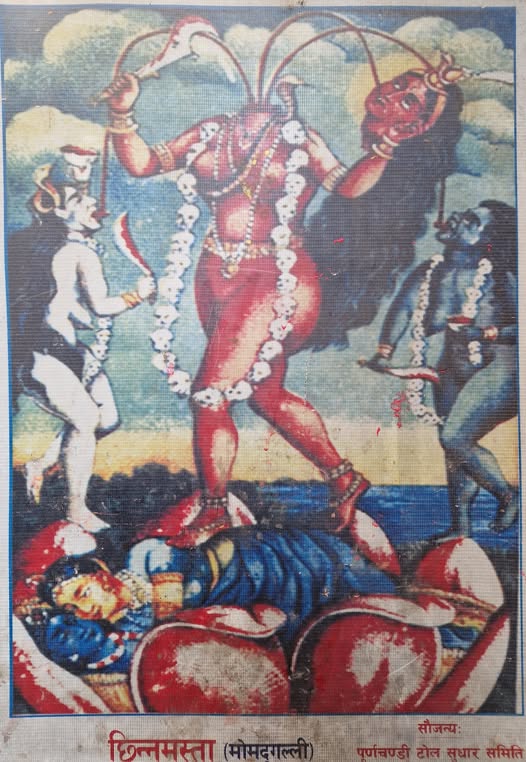
Pic: Shakti (goddess) chinnamasta (severed-headed one, symbolising decapitating her ego), three streams of blood drinking, signaling liberating all 3 nerve channels.








Copyright © All right reserved to pahichan.com Site By: Sobij.
