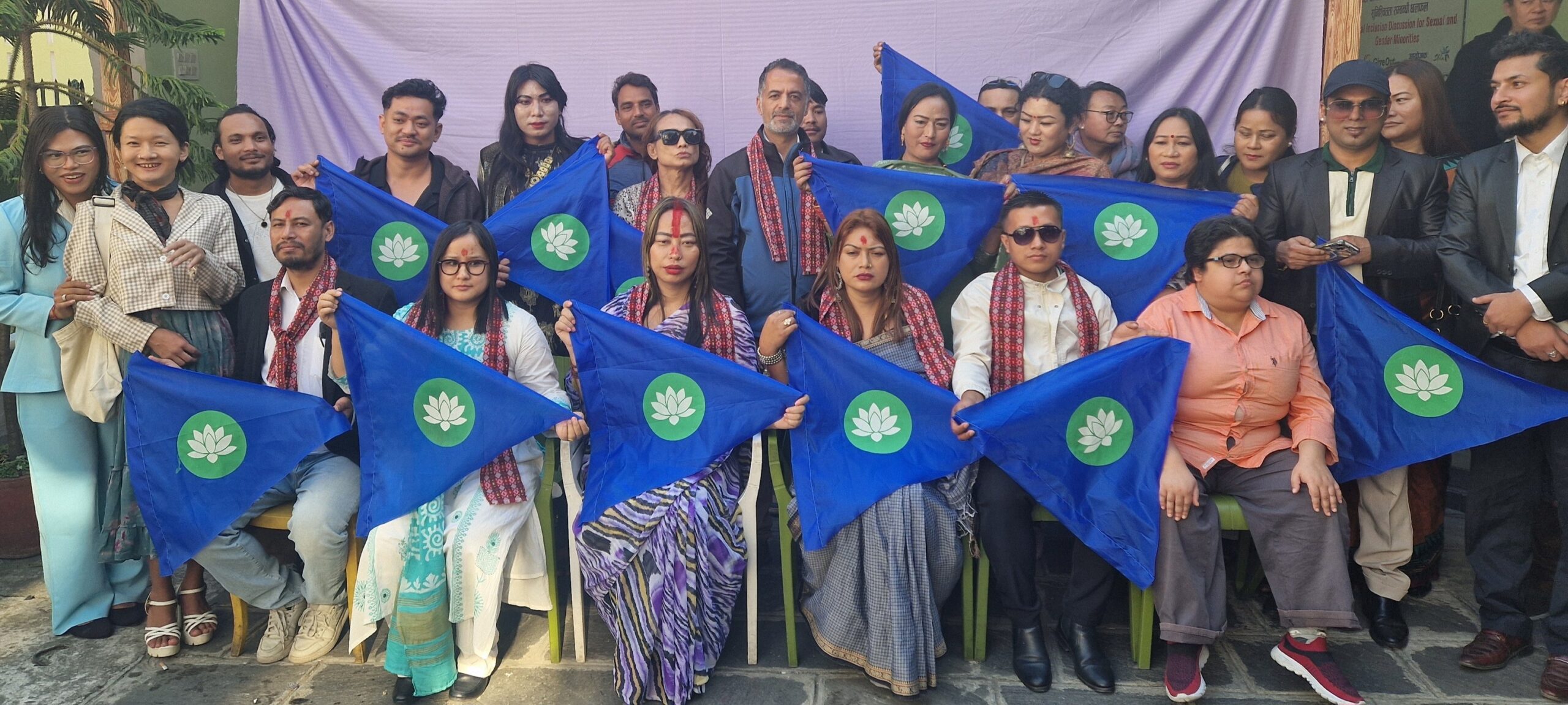
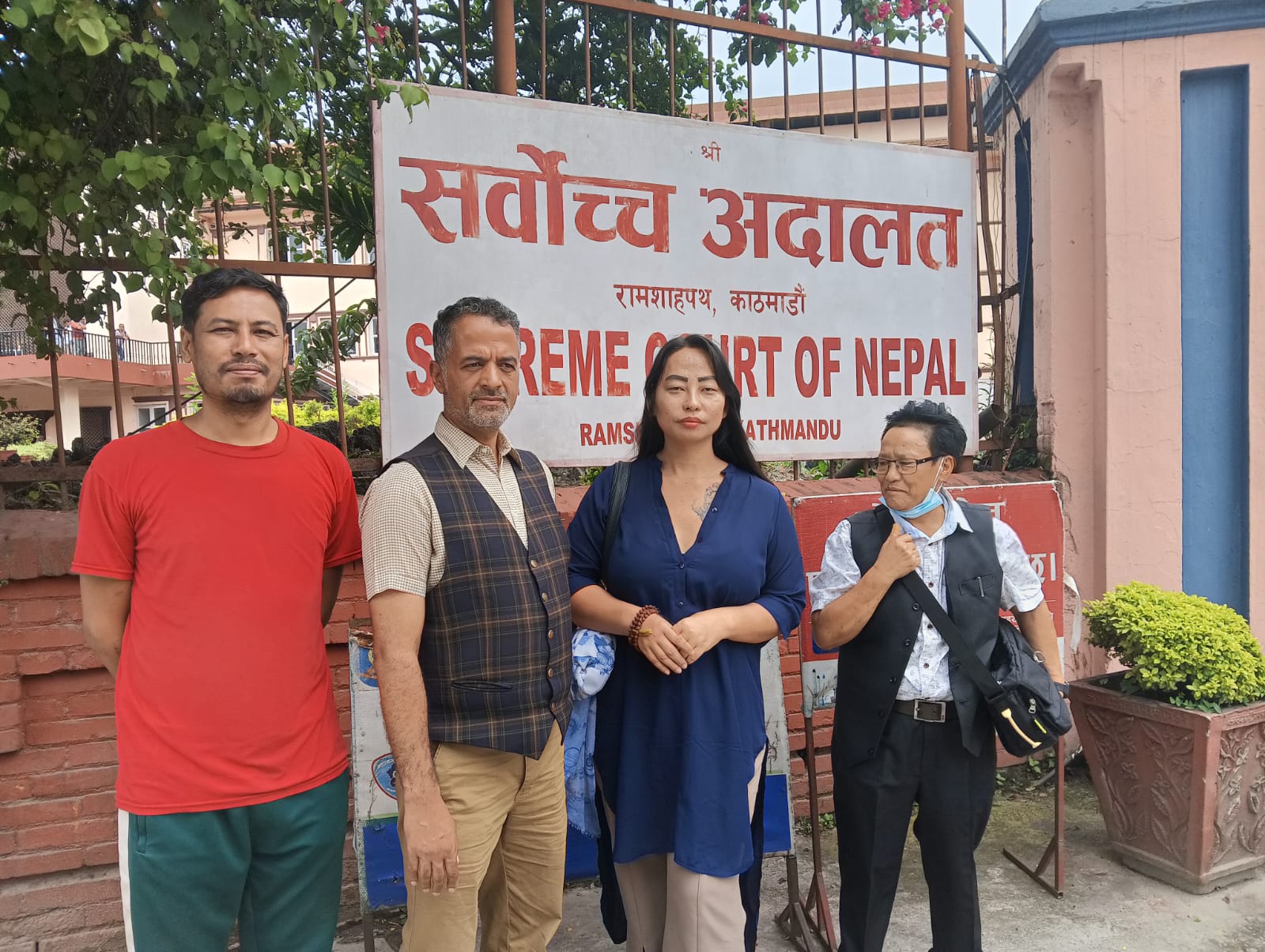
Kathmandu — In a groundbreaking move for Nepal’s democracy, the Gender and Sexual Minority (GSM) community has, for the first time, established its own political party — the Inclusive Socialist Party (ISP).
The formation took place in Kathmandu with the participation of over 500 representatives from across the country, including women and persons with disabilities. The event marked a historic step toward inclusive political representation for marginalized groups long excluded from Nepal’s mainstream political system.
🏳️🌈 Party Identity
Name: Inclusive Socialist Party
Election Symbol: Thunderbolt (Vajra)
Flag: White lotus on a blue triangle
Chairperson: Numa Limbu ‘Chanchala’
Vice Chairperson: Rosy Pun
General Secretary: Manindra Singh Danuwar
Secretary: Sandhya Lama
Treasurer: Lhasang Dorje Bal
Advisor: Former Constituent Assembly Member Sunil Babu Pant
Manifesto 2082: “Cybernetic Democratic Federalism”
The party’s central philosophy, Cybernetic Democratic Federalism, envisions a compassionate and tech-driven democracy, where power is decentralized and directly exercised by the people.
Core Principles:
1. Power from the Ward, Not Singha Durbar: Decision-making should begin at the grassroots level.
2. Technology + Compassion: Governance based on digital transparency and human empathy.
3. People over Politicians: Leadership derived from collective citizen engagement rather than individual authority.
4. Environmental & Economic Justice: A commitment to the circular economy and climate resilience.
The party also promotes Liquid Voting Platforms, AI-powered fairness systems, and an Intersectionality Quota to ensure just representation across gender, caste, disability, and regional lines.
Leaders Speak
Chairperson Numa Limbu ‘Chanchala’ declared:
“The time has come to build a new kind of politics — one led by compassion and powered by technology.
The neighborhood is the state, and the people are sovereign.”
Advisor and former Constituent Assembly Member Sunil Babu Pant said:
“Today is not merely the formation of a new party — it is the declaration of our political presence.
For decades, political parties and the state ignored our existence. Now, we rise to lead our own future. This day is historic not only for our community but for Nepal’s democracy itself — because democracy survives only when it listens to every citizen’s voice. No one can ignore our political existence any longer. We are citizens, we are voters — and now we are leaders.”
General Secretary Manindra Singh Danuwar added:
“We have stood on the streets for others’ parties. Now the time has come to represent ourselves through our own identity.”
Election Plan & Vision
Chairperson Chanchala announced that the party’s registration with the Election Commission is in its final stage. The Inclusive Socialist Party plans to contest the upcoming House of Representatives election on 21 Falgun (March 5, 2026).
She urged GSM individuals affiliated with other political parties, and all citizens who believe in equality, to join hands with the ISP to build a truly inclusive democracy.
Policy Innovations
The party’s political framework introduces several progressive ideas, including:
Tech-based transparency systems (open governance through digital platforms)
Fair resource allocation: 65% to local wards, 25% to provinces, 10% to the federation
Equal respect for nature and humans
Care economy model — recognizing caregiving as an economic contribution
Rotational leadership and Right to Recall provisions in the party statute
A Movement Rooted in History
Advisor Sunil Babu Pant, who made history in 2008 (2064 B.S.) as Nepal’s first and only openly gay Constituent Assembly member, reflected on the community’s 25-year struggle:
“When we win in Falgun 21, we will celebrate our silver jubilee — the completion of 25 years of our fight for equality.”
The formation of the Inclusive Socialist Party has been supported by several organizations, including MayaKo Pahichan Nepal, LID Nepal, Inclusive Forum, Queer Nepal, and Samanatako Aawaz.
A New Chapter for Democracy
The leaders emphasized that this moment marks not just a new party’s beginning but the dawn of a new era of inclusive politics in Nepal — one that embraces diversity, decentralization, and technological innovation as the foundation for a just society.
“This is a bold and historic moment for Nepal — for democracy itself,” said Pant.
“The future of politics is inclusive, intersectional, and cybernetic.”
Copyright © All right reserved to pahichan.com Site By: Sobij.
