
Nepal is not just borrowing money. It is steadily mortgaging its future. What is presented as development finance is increasingly turning into a long-term structural trap, where the country spends more and more of its scarce public resources on repaying old loans instead of investing in its people.
The numbers are alarming and they tell a story that can no longer be ignored.
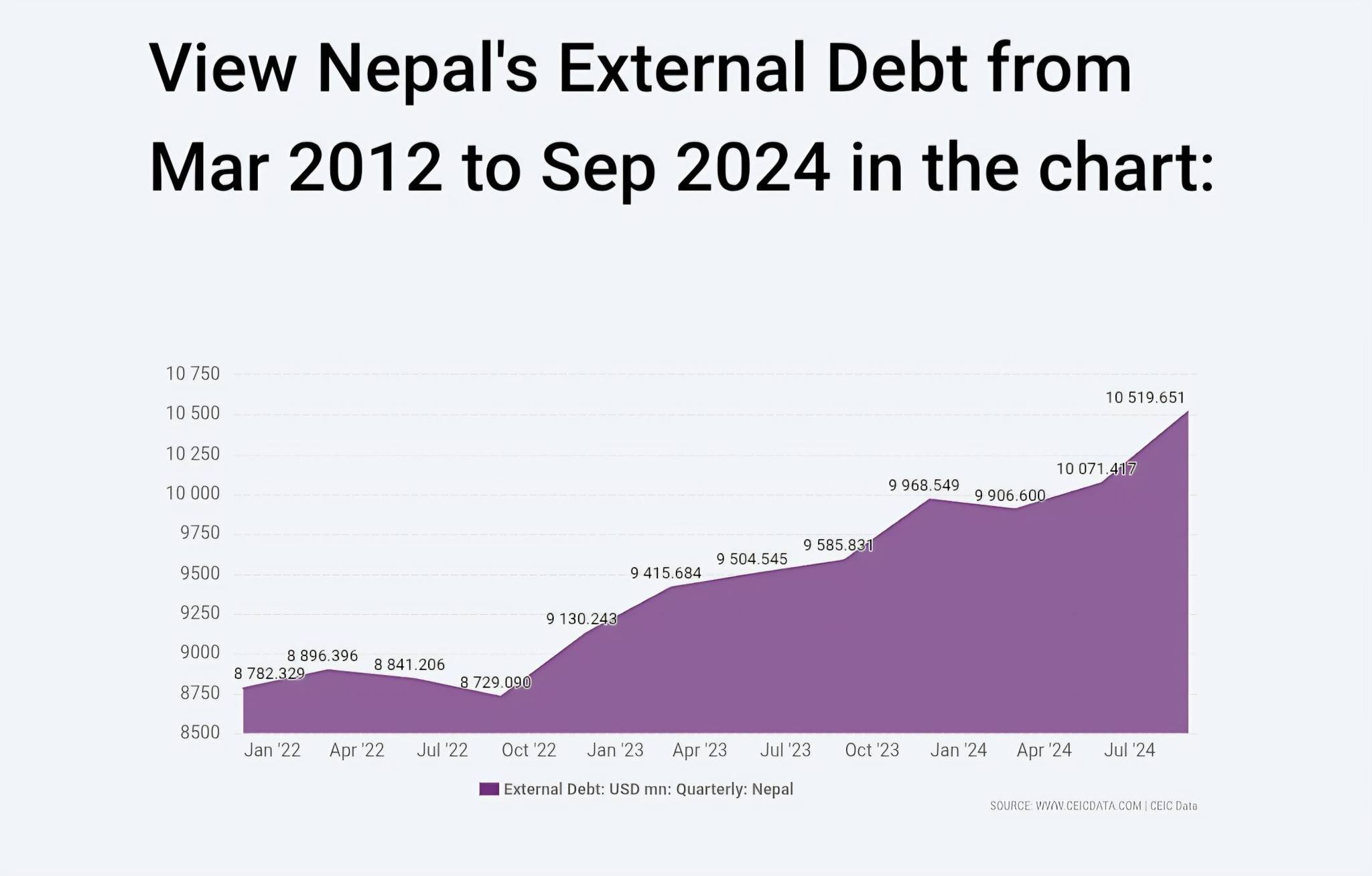
Nepal’s total public debt has crossed NPR 24 trillion in recent years, combining both domestic and external borrowing. Of this, external debt alone stands at over NPR 12 trillion and continues to grow as new loans are contracted to finance infrastructure, energy, and post-disaster reconstruction. While these figures may still appear manageable relative to GDP on paper, the real crisis lies not just in how much Nepal owes, but in how much it is forced to pay every single year.
In the last fiscal year, Nepal spent more than NPR 200 billion on debt servicing, which includes both principal repayments and interest payments. This is an extraordinary amount for a country with limited revenue capacity and massive development needs. To put this into perspective, this is money that could have funded universal healthcare expansion, strengthened public education systems, built climate-resilient infrastructure, or supported marginalized communities including gender and sexual minorities who remain excluded from economic opportunity.
Instead, a growing share of Nepal’s national budget is locked into repaying past debts.
This is not sustainable. And more importantly, it is not just.
International financial institutions such as the World Bank and the Asian Development Bank, along with bilateral lenders including China, continue to extend loans to Nepal under the banner of development cooperation. But the reality on the ground tells a different story. These loans often flow into systems plagued by weak governance, political instability, and entrenched corruption. Projects are delayed, costs are inflated, and accountability is minimal. Yet repayment obligations remain strict and unforgiving.
This raises a fundamental ethical question. Why do powerful global institutions and governments continue to lend to systems they know are vulnerable to misuse? At what point does lending become exploitation?
The answer is uncomfortable but clear. The current global financial architecture benefits lenders. Loans generate interest. They create dependency. They expand geopolitical influence. Meanwhile, the risks are transferred onto the citizens of borrowing countries, who had little to no say in how these debts were incurred.
This is why it is no longer enough to talk about better loan management or improved efficiency. The conversation must shift toward debt justice.
Nepal, like many countries in the Global South, deserves a serious and immediate discussion on debt cancellation. Not partial relief. Not rescheduling. But meaningful cancellation of unjust and unsustainable debt burdens that are actively undermining the country’s development.
At the same time, institutions like the World Bank and the Asian Development Bank, as well as lending governments including China, must acknowledge their role in perpetuating this cycle. An apology is necessary, not as a formality, but as a recognition that their continued lending practices, despite clear evidence of systemic risks, have contributed to making poor countries poorer.
Debt should never have been a tool that deepens inequality. Yet that is precisely what it has become.
Of course, cancelling debt alone will not solve everything. Nepal’s own political leadership must also be held accountable. Corruption, mismanagement, and lack of transparency cannot be ignored. Debt relief must go hand in hand with reforms that ensure public resources are used effectively and equitably. Citizens must have a greater voice in how national finances are managed.
But let us be clear. The burden of reform cannot be placed solely on the shoulders of the borrower while the lenders continue business as usual.
The current system is structurally unfair. It rewards those who lend irresponsibly and punishes those who borrow out of necessity. It prioritizes financial returns over human dignity.
Nepal does not need more loans. It needs fiscal space. It needs justice. It needs the freedom to invest in its people without being suffocated by past obligations.
Cancelling Nepal’s debt is not an act of charity. It is an act of accountability.





Copyright © All right reserved to pahichan.com Site By: Sobij.
