
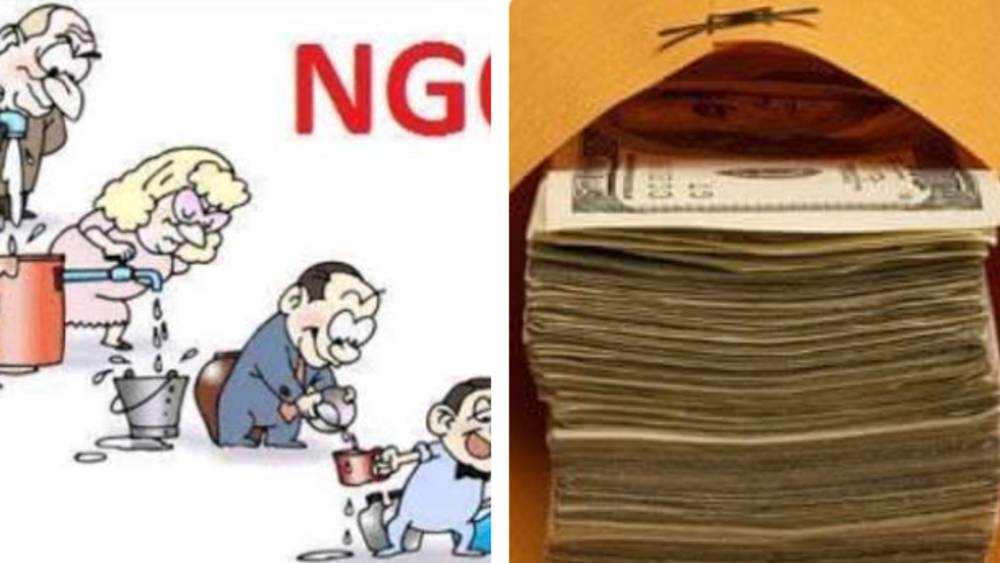
In Pokhara, last year’s Pride did not fail because of police repression, religious backlash, or social fear. It failed because there was no budget for lunch and envelopes.
A young ally — not even from the GSM(gender and sexual minority)/LGBTI community — raised funds for water, rainbow flags, and banners and helped the pride parade for previous two years, supporting the community. When he approached pokhara based GSM/LGBTI organization, he was told: “We don’t have funds for ” khaaja and khaam (lunch and allounces)”. USAID funding has been cut.” He said he could raise money for everything except allowances. The answer was final: without funding, there would be no Pride.
So Pride did not happen.
That is not a logistical problem. That is a political collapse.
1. Activism Has Become Catering
In Nepal, movements no longer grow from courage — they grow from catering. Participation is not based on belief, but on benefits. The first questions are no longer “What is the issue?” but “Which hotel?” “What’s for lunch?” “How much is the envelope?”
NGOs did not inherit this culture — they engineered it.
They trained communities to expect money instead of meaning. They trained officials to expect hospitality instead of accountability. They trained the media to expect perks instead of truth.
Now, activism without allowances is unthinkable. That is not empowerment. That is dependency.
2. NGOs Are Not Solving Problems — They Are Maintaining Them
Let’s be honest: NGOs survive by keeping problems alive. If problems are solved, funding disappears. If funding disappears, organizations collapse. So problems must be carefully preserved — rebranded, repackaged, and resubmitted to donors every few years.
Any NGO that has worked on the same issue for over a decade without structural change is not “persistent.” It is part of the problem.
This is not social work. This is problem maintenance.
3. Compliance Through Hospitality, Not Accountability
NGOs must register with ward offices, municipalities, CDOs, and the Social Welfare Council. On paper, this ensures transparency. In reality, it ensures transactions.
Officials don’t visit. They don’t monitor. They don’t evaluate. They receive lunch and envelopes — often delivered directly to their offices — and stamp approval.
Senior officials receive VIP treatment: luxury hotels, out-of-valley workshops, per diems, travel expenses. Ministries become subcontractors of NGOs. Ministries — especially women, health, and education — are now more occupied with NGO/INGO projects than with their own public mandates.
The media becomes their publicity arm.
This is not civil society. This is a service economy built on convenience and compliance.
4. Where Did the Community Go?
A real community does not live in hotels.
A real movement does not depend on lunch.
Real solidarity is not measured in envelopes.
Yet today, even the community asks:
“Which hotel?”
“How much envelope?”
That is the death of consciousness.
That is why I told the young man from Pokhara: Don’t waste your time with such NGOs. Work with grassroots, loose networks, small and new organizations — those that are not yet captured by this culture. Work with people who come for the cause, not for the compensation.
5. Poverty Support Is Not the Problem — Professional Activism Without Conviction Is
Let us be clear: when NGOs invite poor, marginalized, or struggling community members as beneficiaries, it is absolutely right — even necessary — to cover their travel, food, and basic costs. No one should be excluded from participation because they cannot afford a bus fare or a meal.
But when someone calls themselves an activist, draws a salary from an NGO, holds positions, writes reports, attends conferences — and yet their “activism” stops the moment lunch and allowances stop — that is not poverty. That is professional dependence. That is not solidarity. That is a career model.
That is the real crisis.
6. NGOs and Politicians Are the Same Class
We pretend NGOs are different from politicians. They are not. Both operate through money, access, influence, and survival. Both use “the people” as justification while prioritizing their own institutional existence. Both fear real change — because real change makes them unnecessary.
Nepal does not have only a democracy problem. It has a civil society crisis.
7. Finally,
If Pride cannot happen without lunch,
If justice cannot happen without envelopes,
If solidarity cannot happen without allowances —
Then it is not a movement.
It is a marketplace.
It is not resistance.
It is a transaction.
It is not liberation.
It is livelihood.
And liberation will not come from NGOs.
It will come from people who rebuild movements grounded in risk, sacrifice, and conviction.
Until then, we are not organizing communities. We are managing beneficiaries.
Sunil Babu Pant,
Cultural Emissary for Inclusive (Pink/Rainbow/LGBT+) Tourism in Nepal;
Executive Director, Mayako Pahichan Nepal, Mayakopahichan.com
Film Maker, Meditation Guide, First openly gay member of Parliament in Asia from Nepal. Founder of Blue Diamond society, first lgbitq rights organisation in Nepal.
Former Buddhist Monk
(Spiritual name: Anaagarik Kashyap)


Copyright © All right reserved to pahichan.com Site By: Sobij.
