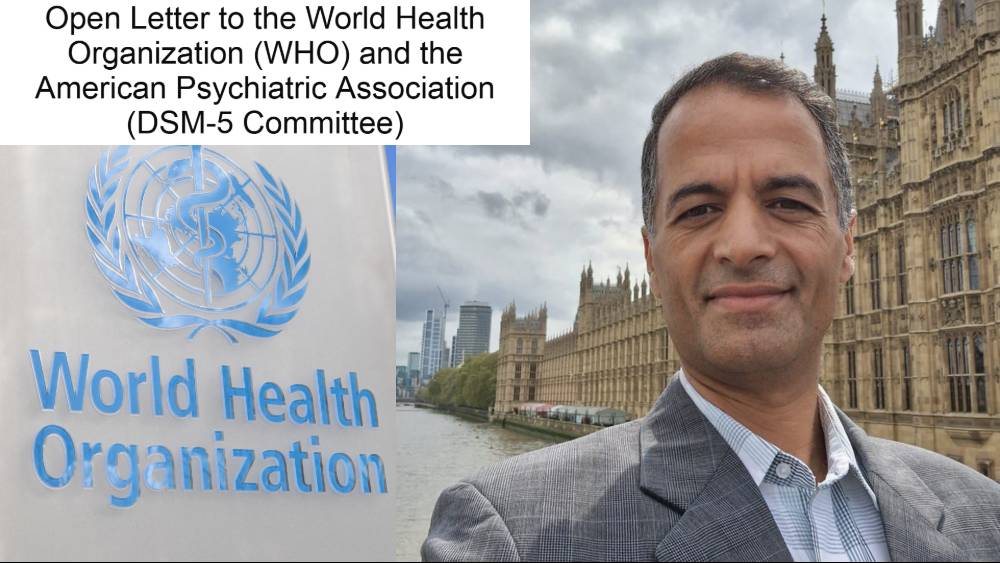
Dear World Health Organization and DSM-5 Committee Members,
I write to you with deep concern over the continued medicalization of gender diversity through the psychiatric classification of Gender Dysphoria in the DSM-5 and Gender Incongruence in related health manuals. While I acknowledge that such classifications were initially intended to enable access to healthcare and legal recognition for transgender people, their very inclusion in the realm of mental disorders reinforces harmful and outdated assumptions about gender.
History offers us a parallel lesson. For decades, homosexuality was pathologized in psychiatric manuals as a mental illness, until the global psychiatric community—following decades of evidence, advocacy, and cultural re-examination—removed it from the list of mental disorders. This shift not only reflected scientific truth but also signaled respect for the dignity and humanity of millions of people. The same rethinking is urgently needed for Gender Dysphoria / Gender Incongruence.
Across much of the Global South, matriarchal societies, and Indigenous cultures, gender diversity is not a pathology—it is part of the natural spectrum of human life. In Nepal’s own history, as in many Asian, Native American, Polynesian, and African traditions, people of third genders, non-binary identities, and transgender experiences were recognized, respected, and often revered as sacred. These identities were integrated into the social, spiritual, and cultural fabric of communities without the need for medical diagnosis or transition into binary categories.
The patriarchal, binary framework that underlies Western psychiatric thinking is not a universal truth—it is a cultural construct. When applied globally, it risks imposing a narrow and alien worldview that harms young people growing differently from the binary norm. Increasingly, children who express gender diversity are being told they are “trapped in the wrong body,” a concept foreign to many Indigenous traditions. This framing drives them toward unnecessary medical interventions as the primary route to social acceptance.
By continuing to treat gender variance as a diagnosable disorder, the psychiatric establishment perpetuates stigma, erodes cultural diversity, and legitimizes discrimination. It tells people that they are “wrong” unless they align with one of two culturally-approved boxes: man or woman. This is not liberation—it is re-routing difference into conformity.
I therefore call upon the World Health Organization and the DSM-5 Committee to:
1. Remove “Gender Dysphoria / Gender Incongruence” from the list of mental disorders and recognize gender diversity as a natural variation of human identity.
2. Develop non-pathologizing frameworks for supporting transgender, non-binary, and third-gender individuals—approaches that affirm identity without requiring medical or psychiatric gatekeeping.
3. Incorporate cultural and Indigenous understandings of gender into global health policy, so that no single cultural framework dominates the classification of human diversity.
4. Invest in training for health professionals to provide respectful, affirming care without framing gender diversity as a medical problem to be fixed.
The world has already moved beyond the idea that homosexuality is a disease. It is time to do the same for gender diversity. The future of global health depends on frameworks that honor dignity and diversity—not ones that confine humanity to narrow categories.
In many cultures, gender-diverse people are not “cases” to be treated; they are valued members of the community, sometimes even considered divine. It is time our global health systems recognized this truth.
Respectfully,
Sunil Babu Pant
First Openly Gay Member of Parliament in Asia (Nepal)
Copyright © All right reserved to pahichan.com Site By: Sobij.
