I never imagined I would live long enough to witness this: to find myself standing outside the very movement I built with my own hands, watching it drift into the arms of foreign agendas, and realizing—slowly, painfully—that I had become a stranger in my own revolution.
Almost twenty-five years ago, when I founded the Blue Diamond Society, I had nothing. No office. No funding. No protection. No certainty. Only a few brave friends, a dream carved out of courage, and a fierce belief that Nepal’s gender-diverse communities deserved the same dignity others enjoyed without question.
Back then, Western diplomats applauded us. International NGOs displayed us proudly. Donors loved to call us a success story. Researchers wrote glowing papers about the Nepali LGBT miracle. And I—young, hopeful, naïve—was flown to conferences, given fellowships, honored on international stages.
I thought these relationships were built on solidarity. I was wrong.
The West teaches its lessons quietly—and only once you stop obeying.
—
The Day a Friend Whispered: “Please Don’t Tell Anyone We Met”
Four years ago, when I was still a Buddhist monk, an old friend who had admired my activism since 2007 asked to meet me in Kathmandu. Before we even sat down, he leaned in and whispered:
“Please… please don’t tell anyone we met.”
I laughed at first. “Why should I hide meeting a friend?” I asked.
Then he delivered a sentence sharp enough to cut bone:
“There is a big campaign against you. Blue Diamond Society people say you are transphobic.”
Your cultural biases, your fears, your convenience—they do not come in my way. They do not change the truth I carry, the love I hold, or the respect I have for you.
Transphobic? Me? Me—who spoke the names no one dared utter. Me—who shielded gender-diverse people with my own body. Me—who spent decades building a movement out of dust and tears.
He looked down and said, “I don’t agree with them. But… it has become unacceptable to be seen with you.”
The message was clear: You refused to bow to the imported ideology. So now you must be erased.
—
Punished for Saying Nepal Has Its Own Gender History
What was my crime? That I dared to speak about our own history. That I reminded people:
Nepal has six or seven genders. Our Ajima traditions honor gender diversity. Hijra, meti, tesrolingi, singaru, maruni, kothi, sbhairini, tantric figures, temple carvings—all existed centuries before the Western word “transgender” arrived.
I said: Third genders are third genders. Trans women are trans women. Trans men are trans men. Every identity deserves respect. Let Nepalis define their own realities. Let’s not push into binary assimilations.
That was enough to exile me. Donors had already chosen their preferred narrative—a Western, medicalized, binary-transition model. Local identities did not fit their template. So they rewarded the obedient and punished the defiant.
Two Nepali third-gender leaders who once identified proudly as tesrolingi suddenly became “transgender activists” overnight—and were rewarded with global fame: State Department awards, BBC features, “100 Most Powerful Women” lists. They denounced me. Protested me. Rejected the very third-gender identity we had fought for. And the world applauded. Meanwhile, the founder of the movement was labeled dangerous.
—
2011: My First Lesson in Non-Compliance
The unraveling began earlier than I realized. In 2011, during the Occupy Baluwatar moment, the U.S. Embassy strongly encouraged us to join an unrelated political protest. I respectfully declined.
“Our LGBTI rights are fragile,” I said. “If we join this protest, our own goverment might turn out against us.”
I thought I was protecting the movement. But in the eyes of power, I had committed the first sin: I said ‘no.’
A few months later, I was on a State Department–endorsed travel program with five young Members of Parliament (MPs). Everything was normal—until I landed in New York. I was detained. Interrogated for over an hour. They questioned my relationship with a Maoist MP whose visa had been denied (Maoists were once listed as terrorists by the US government ; the label was later quietly removed, no body knows why). I explained we merely served in the same Nepalese Parliament together. But the hostility was chilling.
Back in Kathmandu, I reported the humiliation to Ambassador Scott DeLisi. He said: “Someone from the Embassy provided that information.” That day I learned: if you do not align with donors’ political interests, they will teach you a lesson you will not forget.
—
2012: Destroy the Founder, Control the Movement
Then came 2012. Anonymous allegations surfaced—corruption, mismanagement—mysterious whispers with no names, no details, no evidence. But they were loud enough for donors to unleash the Global Fund’s OIG. They raided our office.
For a week, staff were interrogated for hours. Computers unscrewed and cloned. Hard drives copied. Files torn apart. Fear spread like smoke.
Rumors exploded: Sunil will be arrested. BDS will be shut down. Airport alerts issued. The media devoured it. My decades of work evaporated under the weight of suspicion. Towards the end of 2012, in a informal gathering of Nowegian partner NGOs in Nepal, a Norwegian diplomat asked me to resign from Blue Diamond Siciety. I resigned in 2012—broken and exhausted. OIG entered our lives in two days and left five years later without a word.
—
2017: The Truth Arrives—When Nothing Is Left to Save
In 2017, I visited Geneva and went to the OIG office myself. The officer said: “Your case was closed long ago. No discrepancies were found.” Then: “We only publish negative findings. If someone is innocent, nothing is released.”
Meaning: if you are guilty, the world hears forever. If you are innocent, no one ever knows. This is not justice. This is institutional violence. No donor ever apologized.
—
The Western Allies Who Became Judges
Many Western activists who once embraced me disappeared the moment I insisted Nepal had its own gender systems. Some trained young Nepali activists to isolate me: “Sunil Pant is a threat to trans rights. He must be silenced.” And they succeeded.
They pressured conferences, discouraged collaborations, and spread whispers disguised as “concern.” During last international ILGA World’s conference, Global Equality Caucus invited me to South Africa—until trans activists complained under Western mentors’ guidance. I wasn’t canceled, but I was kept low-profile. The American Center in Kathmandu invited me during Pride Months two years ago—then quietly canceled. A British ally walked out of our first International Rainbow Tourism Conference at the last minute in April 2024 saying, “his reputation would suffer.” A U.S. friend encouraged me to apply for IGLTA’s TUI fellowship—but activists filed complaints behind the scenes, and after four months I got a polite rejection: “Not the right fit.”
The message was unmistakable: we will punish you. And we will punish anyone who stands with you. This is not activism. This is geopolitics wrapped in rainbow flags.
—
When ILGA Asia Came to Kathmandu—but I Was Erased
The clearest sign came last year. ILGA Asia held its regional conference in Kathmandu—a landmark event for queer Asia, hosted in the city where we once built South Asia’s bravest movement. And I was not invited. Not as a speaker. Not as an observer. Not even as a shadow in the back row. The founder of Nepal’s LGBTI movement—excluded from his own home ground.
Still, a dear friend from Norway, once deeply close, met me quietly. She said: “Sunil… the way you stand for gender diversity and third-gender rights… Nepali trans women will find it difficult to become women legally, they will have only choice to ramin as trans women.”
Shortly after, another friend from the U.S. called me: “We can’t support you, Sunil. We have to protect vulnerable transgender communities… and, honestly, we have our own cultural biases.”
Their honesty was chilling. They chose convenience over solidarity, donor politics over integrity. That was the moment I understood: for many Western allies, loyalty is conditional. But their biases are unconditional.
—
The House I Built, Trying to Burn Me Down
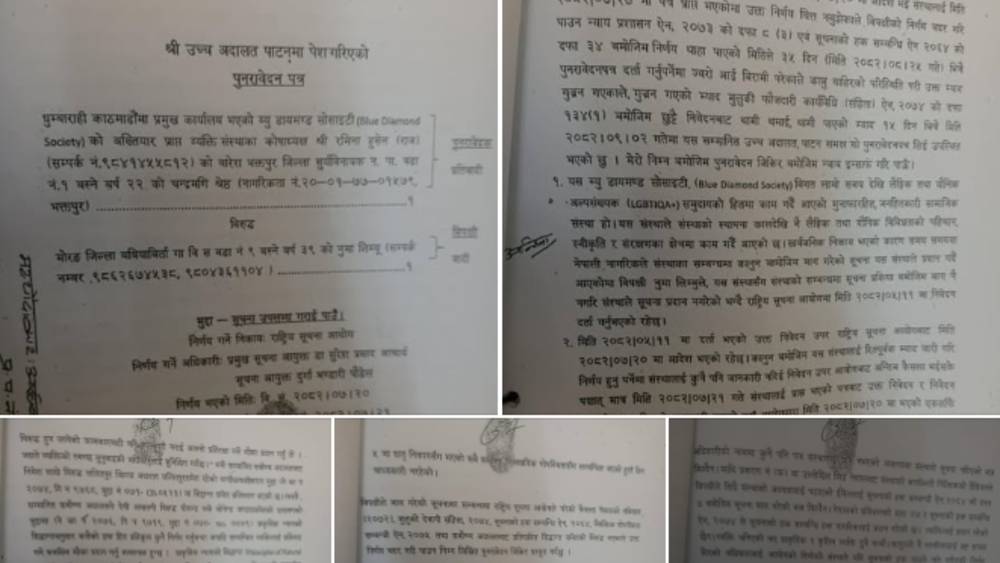
When Nepal Tourism Board appointed me Cultural Emissary for Rainbow Tourism two and half years ago, BDS organized a protest against me—its own founder.
It has been thirteen years since I left Blue Diamond Society. Not once have they invited me to an Annual General Assembly. Not once have they shared transparent reports. Membership is closed.
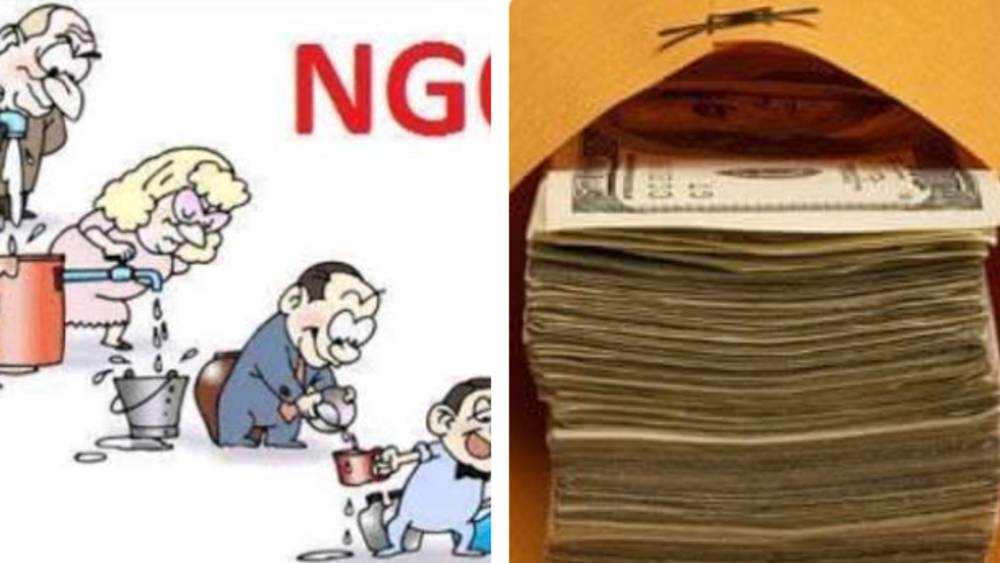
Accountability nonexistent. And yet donors continue funding them without question. Unlike when rumors against me surfaced—they were very prompt then.
The lesson is simple: we reward compliance. We punish dissent.
—
Why I Still Stand
After all this humiliation—after the betrayals, the hate campaigns, rewritten histories, silent cancellations, whispered assassinations—why do I still speak?
Because my loyalty is not to donors. Not to embassies. Not to international NGOs. My loyalty is to Nepal’s own gender-diverse heritage. To the Ajima spirits. To our six or seven genders. To the temple carvings, the tantric wisdom, the ancestors who recognized complexity long before Western theories existed.
Our liberation cannot come from imported frameworks. Our dignity cannot be outsourced. Our truth cannot be overwritten.
—
My Appeal—Not for Sympathy, But for Integrity
I do not want sympathy. I do not want revenge.
I want a future where hijra are respected, third-gender identities are protected, trans people have dignity rooted in Nepali culture, local truths are honored, and activism is accountable to communities—not donors.
I Am Still Here
After everything—I lost opportunities. Lost invitations. Lost allies. Lost friendships. Lost my place in a story I helped write. But I never lost the one thing that matters: my truth.
And truth—especially truth rooted in history, culture, and courage—cannot be canceled. I am still here. Still speaking. Still standing. Still believing.
—
To all my friends, near and far:
I have learnd the hard lesson but,
please, if you plan to invite me, don’t do so only to cancel later. Such gestures cut deeper than silence.
Know this—our friendship is not conditional. You will remain my friends, always.
Your cultural biases, your fears, your convenience—they do not come in my way. They do not change the truth I carry, the love I hold, or the respect I have for you.
Friendship, like freedom, is not about obligation. It is about presence, honesty, and integrity.
I am still here. And I hope you are too, not just in words, but in heart.

Copyright © All right reserved to pahichan.com Site By: Sobij.
