I have lost my faith—not in human rights as a principle, but in how loudly some institutions invoke human rights while quietly dismantling its foundations.
For years, I believed that transparency and accountability were non-negotiable values within Nepal’s LGBTIQ movement. I believed that organizations claiming to represent the most marginalized—particularly transgender communitiy—would welcome scrutiny, questions, and democratic oversight. I was wrong.
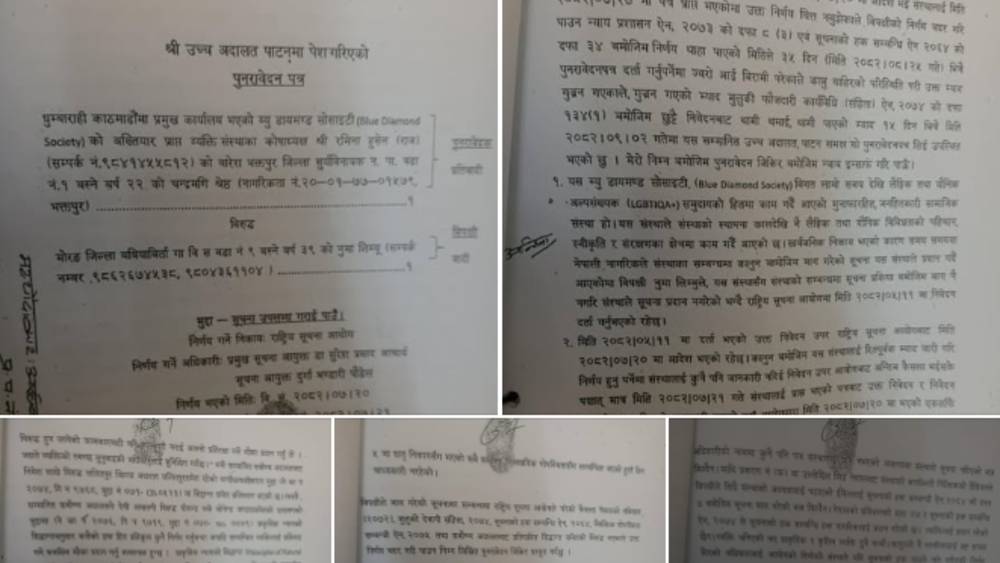
Today, one of Nepal’s most prominent GSM/LGBTI-rights organizations, the Blue Diamond Society (BDS), is suing its own third-gender community member, Numa Limbu (Chanchala), not for violence, defamation, or misconduct—but for asking questions.
The “Offense” of Seeking Accountability
Numa Limbu’s demands were neither radical nor malicious. Along with other community members, she requested what any rights-based organization receiving public and donor funds should be prepared to disclose without hesitation:
five years of audit reports, donor agreements, senior staff salary scales, procurement records, and consultation details.
There was no smear campaign.
No personal data requested.
No threats.
Only questions.
Only accountability.
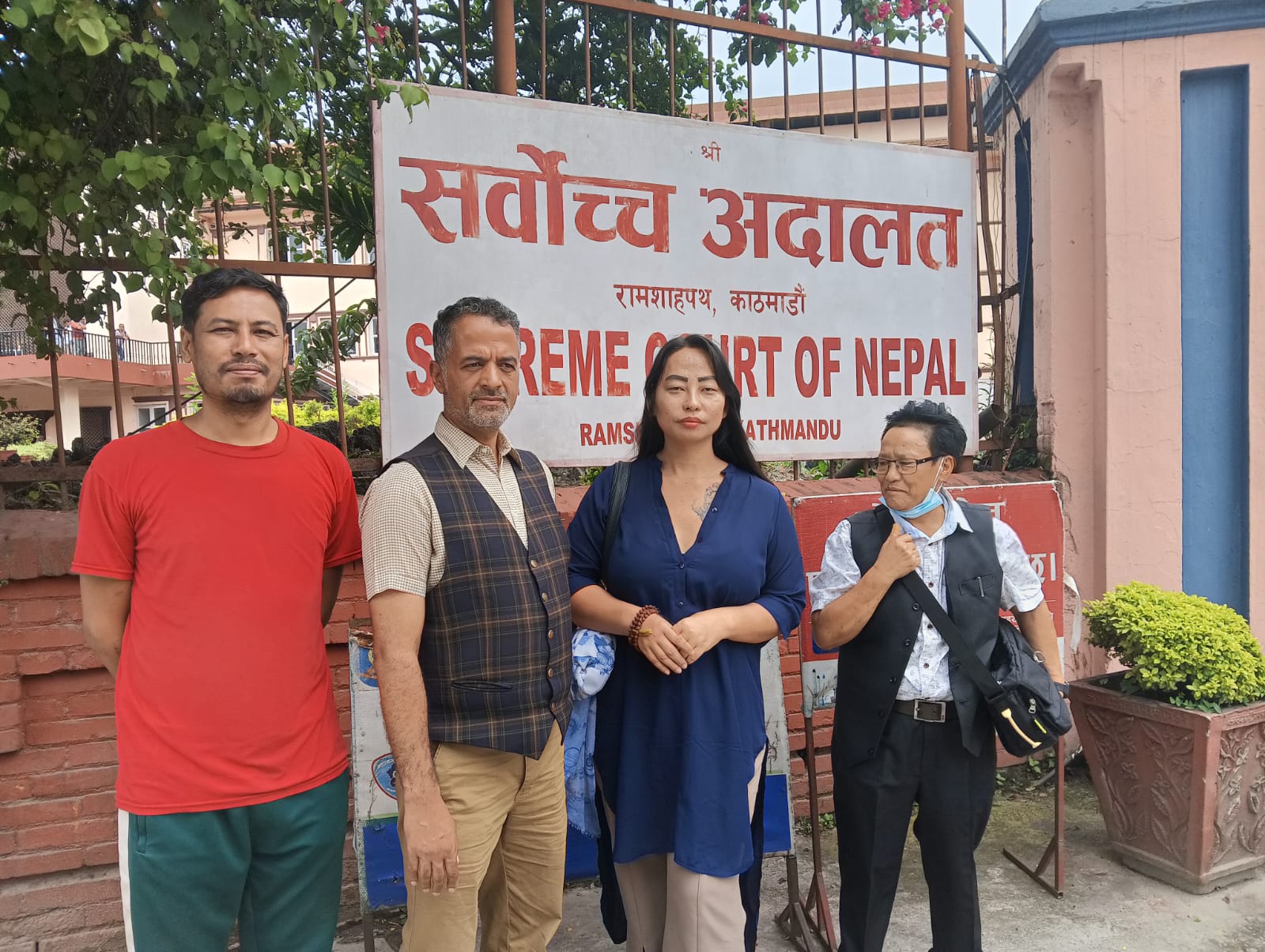
When BDS failed to respond, Numa exercised her constitutional right and approached the National Information Commission (NIC). The Commission’s decision—No. 169—was unequivocal: as an organization receiving donor and public funds, BDS is legally obligated to disclose such information. It ordered the release of board minutes, consultant remuneration details, and staff termination records within seven days.
BDS did not comply.
Instead, it filed a lawsuit against Numa Limbu—arguing that releasing institutional financial and administrative records would violate the organization’s “right to privacy.”
1) When Human Rights Language Is Weaponized
This argument would be absurd if it were not so dangerous.
For more than two decades, BDS fought bravely to protect the right to privacy of LGBTIQ individuals—so the state could not police bodies, identities, or intimate lives. Today, that same language is being twisted to shield bank accounts, salary structures, and procurement decisions from scrutiny.
Senior NGO professionals—many of whom speak openly at international conferences, appear in global media, travel freely on donor funds, and draw salaries exceeding NPR 200,000 per month—are suddenly presented as vulnerable victims whose “privacy” would be harmed by transparency.
These are not persecuted individuals hiding from the state.
These are powerful NGO elites with institutional backing.
To equate audit reports and donor contracts with personal privacy is not only legally weak—it is morally dishonest.
Transparency is not harassment.
Questioning power is not violence.
Asking for audits is not abuse.
2) The Pokhara Pattern: Accountability vs. Lifestyle
Nowhere is this contradiction more visible than in what many community members privately refer to as the “Pokhara season.”
Almost every year, from Christmas to New Year, a large group—often estimated by insiders at around 150 BDS-aligned staff, consultants, and loyal supporters—converges in Pokhara’s luxury resorts. These gatherings are routinely justified under donor-approved labels:
mental-health retreats, capacity-building workshops, strategic reflections, or team well-being programs.
Meanwhile, grassroots gays, lesbians, trans and third-gender community members struggle with homelessness, unemployment, lack of access to healthcare, and routine police harassment in Kathmandu and beyond.
When questions are raised about how such retreats are funded—about per diems, hotel costs, travel expenses, or procurement—critics are not answered. They are attacked.
Ask about Pokhara, and you are branded “anti-community.”
Ask for an audit, and you are called “anti-gender,” “transphobic,” or a “troublemaker.”
Persist, and you face litigation.
This is not accountability.
It is intimidation wrapped in rainbow language.
3) The “NGO Impunity Complex”
Numa Limbu’s case exposes a deeper crisis within Nepal’s development and human-rights sector: a growing NGO impunity complex.
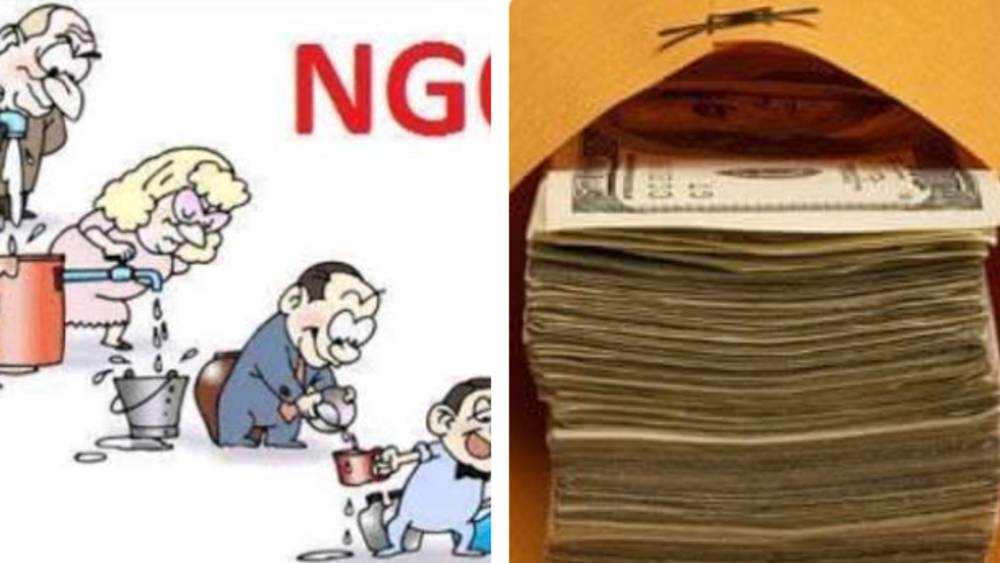
A small circle of powerful organizations operates with near-total opacity, protected by donors, shielded by government officials, and amplified by sponsored media. Loyalty is cultivated—not to communities, but to funding streams. Donor language replaces local realities. Identity becomes branding. Accountability becomes optional.
With international backing, these organizations influence ministries, district offices, and regulatory bodies. Red flags are quietly ignored. Media houses dependent on NGO advertising and fellowships rarely ask difficult questions. Dissenters are isolated, discredited, or dragged into court.
Human rights becomes performance.
Power becomes permanent.
4) Why Numa Limbu Was Targeted
Let us be honest. Numa Limbu is not being sued by accident.
First, she demanded transparency that threatens entrenched conflicts of interest.
Second, she asserts a third-gender woman identity rooted in local history, resisting donor-driven identity homogenization (ie transwoman).
Third, she refused the unwritten loyalty test—choosing to align with independent voices, including the organization’s own founder (Sunil Babu Pant), who has been excluded from BDS Annual General Assembly Meetings for over thirteen years and BDS refused to share annual reports, audit reports etc since last 13 years with its own founder.
This is not coincidence.
This is discipline.
A warning to others:
Do not ask.
Do not dissent.
Do not step outside approved identities or alliances.
5) A Movement at a Crossroads
For over a decade, I have formally requested audit reports, donor agreements, and progress reports from BDS. I received silence. Now, that silence has turned into litigation against a third-gender activist who dared to ask publicly.
If this strategy succeeds, it will set a terrifying precedent: that NGOs can operate entirely on public and donor money—yet remain answerable to no one.
This is no longer just about Blue Diamond Society. It is about the soul of Nepal’s human-rights movement.
If transparency is treated as an attack,
if whistleblowers are criminalized,
if identity is weaponized to silence dissent, and if donors reward comfort over accountability—then human rights becomes hollow theater.
I still believe in human rights. But today, I no longer believe that power automatically stands on the side of rights.
And unless donors, courts, and civil society choose accountability over impunity, the real question is no longer who represents the community—but who dares to speak when representation itself becomes a form of oppression.

Copyright © All right reserved to pahichan.com Site By: Sobij.
