
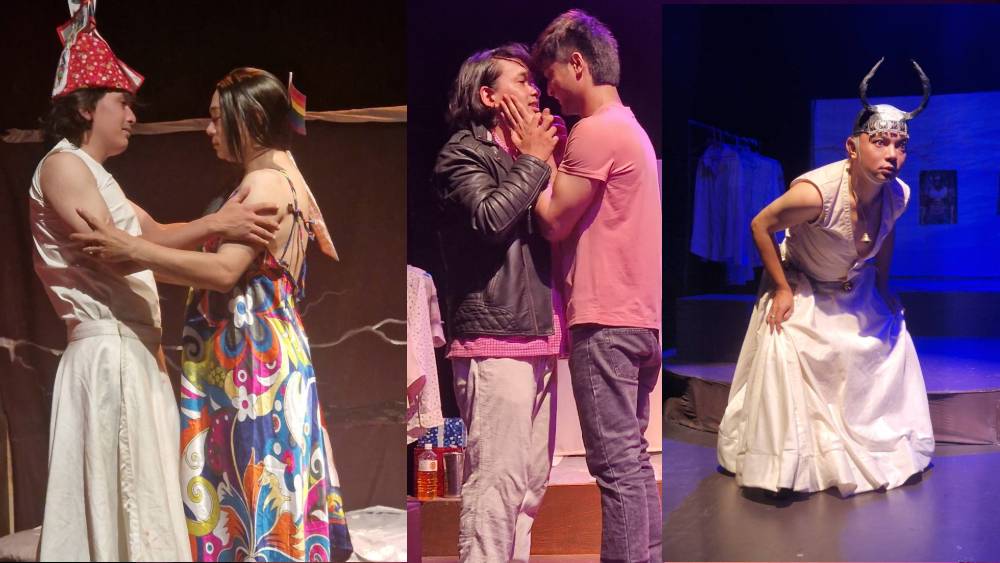
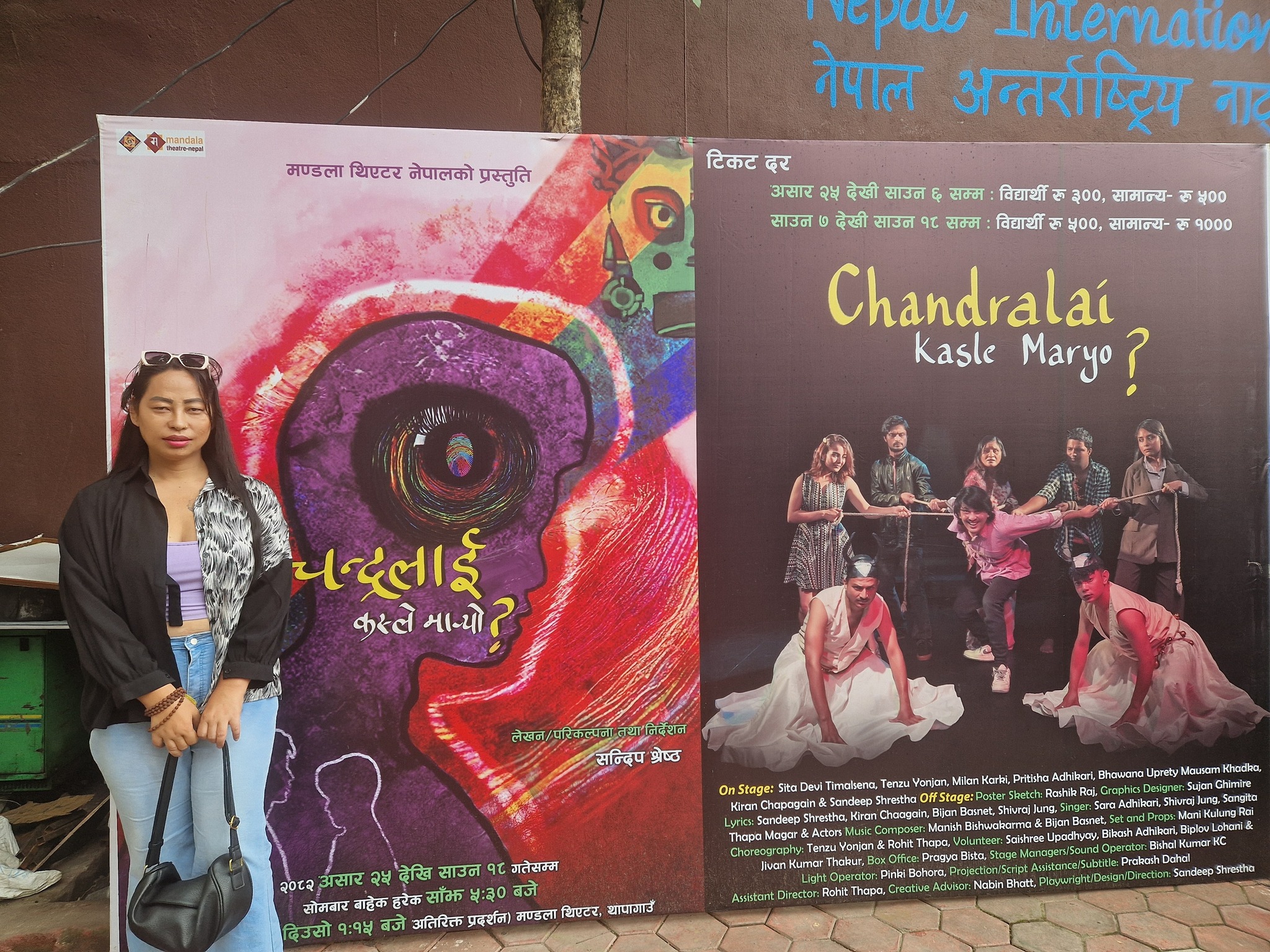
This one line haunts you long after the lights go out at Mandala Theatre, where ‘Chandra Lai Kasle Maryo?’—written, directed, and envisioned by the brilliant Sandip Shrestha—is currently staging to a captivated audience. I had the honour of witnessing this powerful play today, and I can only express heartfelt appreciation to Sandip and the entire team for daring to bring such a vulnerable, tender, and tragically real story to life.
At its heart, Who Killed Chandra? is not a mystery in the conventional sense. It’s a slow unlayering of a life—of Chandra, a gay man grappling with his identity in a society that polices gender, denies love, and offers shame instead of sanctuary. The play gently and brutally takes us through his inner world: from the quiet yearning of love to the thunderous ache of rejection, and finally, to the profound silence of despair.
What makes this play unforgettable is its raw depiction of emotional betrayal. Chandra falls in love with a man who, despite being in love with him too, chooses the safety of societal approval over authenticity. This man—afraid to be outed, afraid to admit his truth—turns against Chandra, rejecting him and projecting hatred to mask his own fear. It is not uncommon, and that makes it all the more painful to watch.
There are scenes that stab straight into the heart. Chandra’s emotional outfall with his parents is so honest, so desperately human, that it leaves the audience in complete silence. And when Chandra cries out to his mother for help and acceptance, you simply can’t stop crying.
The incorporation of Gaijatra Pride and the mythical river Baitarani—which one must cross to reach heaven—gives the narrative a symbolic weight that connects personal grief to cultural mythology. It’s not just about Chandra; it’s about every queer individual who has had to cross their own Baitarani in silence.
This is more than theatre. It’s a mirror held up to a society that still shuns tenderness between men, that demands conformity and punishes difference. Sandip Shrestha and his team have crafted a deeply empathetic, poetic, and necessary work—one that does not just ask “Who killed Chandra?” but pushes us to ask: What silences, what fears, what institutions—kill people like Chandra every day?
Let this not be just a play we watched. Let it be a question we carry.


Copyright © All right reserved to pahichan.com Site By: Sobij.
