
History is full of grand promises. Communism promised equality, capitalism promised freedom, socialism promised justice, and countless other “-isms” have pledged to create a better world through new systems of governance. Yet, despite revolutions, constitutions, and reforms, one truth stands out: no political system has succeeded in making people less jealous, more compassionate, or truly wise.
If the individual remains corrupt, greedy, and ego-driven, even the best-designed system will fail. The question we must ask is: why do we keep expecting structural change to produce moral, human-value based and spiritual evolution?
1. The Fundamental Flaw of Political Ideologies
Every political ideology—whether communism, socialism, or liberal democracy—focuses primarily on how to manage people and nature. They obsess over governance models, economic distribution, and power dynamics. But here is what they all ignore:
Human consciousness.
The inner landscape of emotions, values, ethics and wisdom.
How to cultivate qualities like compassion, humility, and wisdom.
The assumption seems to be that if we change the system, people will automatically change. Reality disproves this every day.
Same law, different interpretations: Two judges in the same legal system can reach opposite verdicts on the same case.
Same constitution, different outcomes: One leader upholds democratic values, another exploits loopholes to centralize power.
Same resources, different behavior: One minister invests in public good, another steals for personal gain.
Why? Because the character and consciousness of the individual shape how any system functions.
2. Why Structures Alone Cannot Transform Society
Political systems create rules and distribute power—but they cannot remove envy, greed, fear, or ego. The Soviet Union collapsed not only because of economic inefficiencies but also because corruption, authoritarianism, and lack of empathy rotted it from within. Similarly, capitalist societies with perfect “free markets” still suffer from extreme inequality, corporate greed, and environmental destruction.
Even Nepal’s own experience with federalism and progressive constitutional provisions shows this paradox: on paper, we have inclusive systems; in practice, corruption, nepotism, and self-interest undermine them.
The reason is simple: systems operate through people. If people are unconscious, no system can deliver justice.
3. The Missing Dimension: Consciousness Development
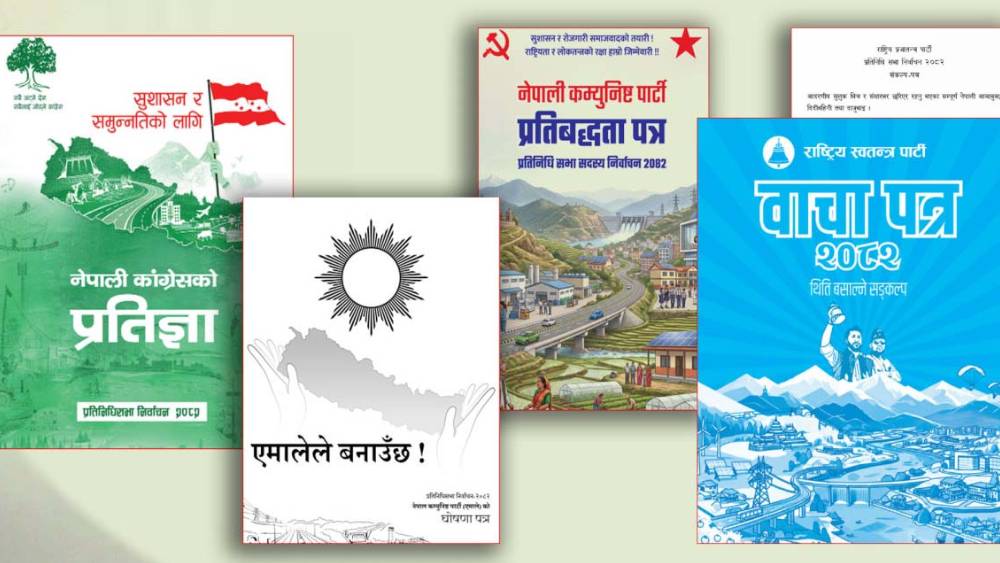
We talk endlessly about reforms—electoral reforms, judicial reforms, governance reforms—but when do we talk about inner reform? How many political manifestos address:
How to make citizens and leaders less jealous?
How to cultivate empathy in governance?
How to promote wisdom over ambition?
The truth is uncomfortable: most “-isms” are obsessed with control, not consciousness. They build external structures without addressing the internal state of the human mind. This is why every ideology eventually becomes a tool of domination rather than liberation.
4. What Needs to Change
Before we design another grand political model, we need a cultural and spiritual revolution centered on three principles:
A. Education Beyond Utility
Our education systems train workers, not humans. We teach how to make a living, not how to live. Schools and universities must integrate philosophy, ethics, mindfulness, and emotional intelligence as core components—not optional luxuries.
B. Practice of Compassion and Awareness
Compassion cannot be legislated; it must be cultivated. Meditation, dialogue, yoga, and community-based reflective practices should become mainstream—not as religious rituals but as tools for human development.
C. Harmony with Nature
Most political systems—whether socialist or capitalist—treat nature as a resource to exploit. A truly evolved system must see nature as a co-existence partner. Without this shift, climate collapse will expose the bankruptcy of every “-ism.”
5. The Hard Truth About Power and Morality
Even the most progressive constitution fails if power is concentrated in the hands of selfish and unconscious leaders. A corrupt, jealous, and ego-driven politician will weaponize any ideology—whether left, right, or center—for personal gain. We’ve seen this repeatedly across continents and centuries.
Systemic change is necessary but insufficient. The real work lies in transforming human minds and hearts. Without a foundation of compassion, wisdom, and self-awareness, political systems remain fragile masks over primal instincts.
6. Toward a Consciousness-Based Politics
The future of politics cannot be about which system wins—capitalism, socialism, or a hybrid. The real question is:
Can humanity evolve fast enough to sustain any system without destroying itself?
For that, we need to stop outsourcing morality to constitutions and start building it within individuals. Political revolutions must go hand in hand with inner revolutions.
Let us design systems that empower individuals and communities—not to dominate but to nurture.
Let us reimagine progress—not as GDP growth but as growth in empathy, awareness, harmony and wisdom.
Let us measure governance not by election cycles but by the depth of human flourishing it enables.
Until then, every “-ism” will fail. Because no system, however perfect on paper, can save a world governed by ignorant/unconscious minds.





Copyright © All right reserved to pahichan.com Site By: Sobij.
