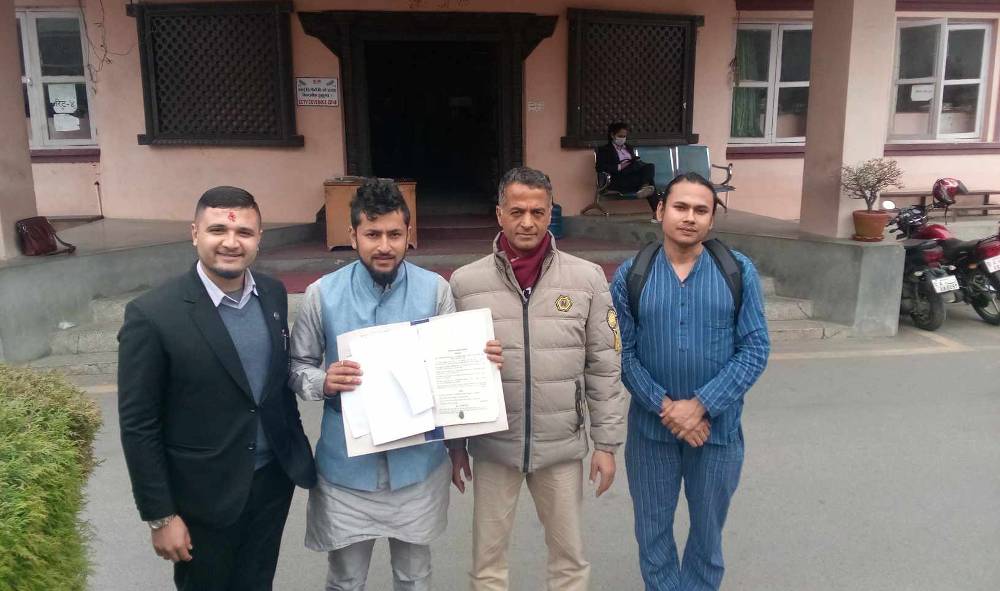
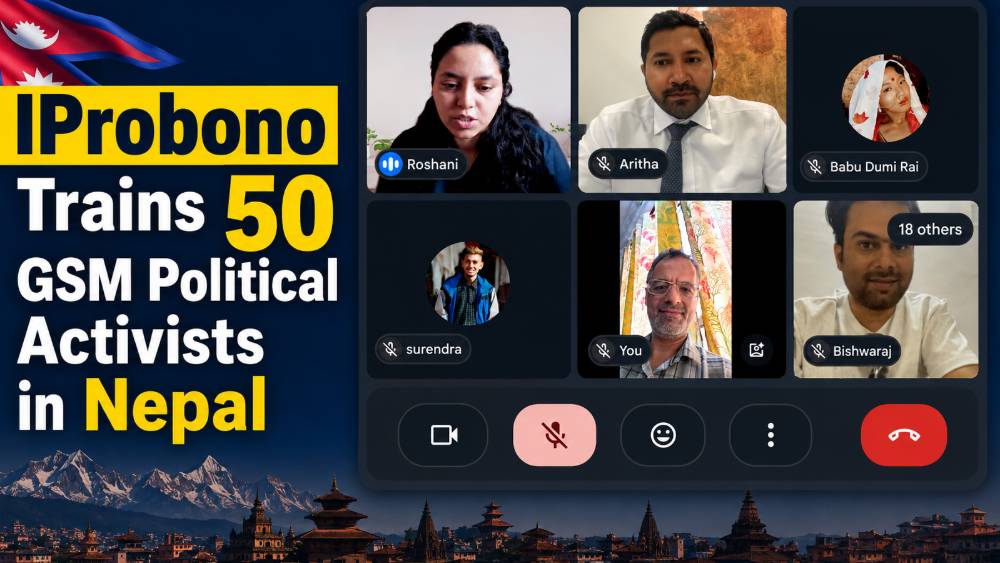
Kathmandu – Bishwaraj Adhikari, a proportional representation candidate from the Samabesi Samajbadi Party in the House of Representatives election held on Falgun 21, has described his first electoral experience as a “lesson learned.”
He believes that the challenges faced during the election, the issues observed in the electoral process, the insights gained, and the areas requiring personal improvement can all be leveraged in the upcoming local level election.
The official stated that he wishes to immerse himself in central-level politics and is currently learning the ropes. He also shared that individuals from the gender and sexual minority (GSM) community are preparing to run as candidates in the local-level elections.
Adhikari, a political activist for gender and sexual minorities and the winner of ‘Mr. Gay Nepal 2013’, stated that he has been working as a social activist for the rights of the gender and sexual minority (GSM) community for the past 10 to 15 years.
He stated that issues regarding corruption often arise alongside the concerns of the sexual and gender minority community. He noted the compulsion to grapple with various problems facing society and the nation.
“If the state proactively addresses issues like the cost of living, unemployment, and quality education without us having to struggle for them, then the need for us to fight for these causes would not arise. Therefore, it is a good and respectful approach to first resolve the most glaring problems visible in society, and then gradually address the issues faced by minority groups and other diverse communities,” he said.
Adhikari emphasized the importance of marginalized communities entering the political arena. “We must ask whether we are truly included in the current republic. The core essence of the republic is to bring minorities, marginalized groups, and the downtrodden to the forefront and mainstream them. Yet, it is precisely these groups that have not been able to flourish; many of their rights remain curtailed. Since the current republican system has placed the sexual and gender minority community in an even more precarious position, they need to step forward even more than other communities,” he said.
He maintains that since these rights are guaranteed by the constitution, they must be asserted and implemented. “Rather than questioning the ‘why’ or ‘how,’ we must recognize that this is our right and stake a claim to it. The significance of this lies in the fact that if we can transform the issues and concerns arising in society into political agendas—moving beyond the purely social realm—we can garner public support and build connections with the people. This, in turn, leads to the entrenchment of these rights within the constitution and the law,” he said.
Adhikari stated that although everyone is encouraged to join politics, the primary avenues for entry remain obstructed or closed. “They say, ‘Come, you are welcome,’ yet the reality involves navigating numerous hurdles. The issue is that we do not fit into their existing policies. The prevailing practice is that while they grant membership, there is no provision—whether in terms of a dignified presence, the allocation of responsibilities, roles in the secretariat and departments, or even the formal rules and regulations—to accommodate us meaningfully,” he said.
Adhikari maintains that not only political parties but also intellectuals, media personalities, and civil society must bring the issues of the gender and sexual minority community into the mainstream.
“It is disheartening that not only political parties but also intellectuals, media personalities, and civil society fail to bring this issue into the mainstream. It seems as though the ink in their pens runs dry—or other issues suddenly arise—whenever it comes time to write about our cause. I believe this is because we do not truly understand what democracy entails, nor has it been properly implemented,” he said.
Political activist Suman Chepang expressed confidence that he could raise the funds needed for the election. “I have hope—after all, my community is large. Since a fellow member of the community is representing them and standing up for their rights, I am certain they won’t just sit idly by,” he said. “I am hopeful that my community and my family will step up and offer their support.”
He recalled his past work as a social worker in the neighborhood, community, and society. He mentioned that he had obtained membership in the Nepal Communist Party (NCP). “I also hope to secure a ticket for the upcoming election. I have already proposed my candidacy to the central and district in-charges,” he said.
The views expressed by Adhikari and Chepang—emphasizing the need to transform rights issues of the GSM community from a social movement into a political agenda and to establish direct community representation in state policies, laws, and decision-making processes—indicate that, alongside political literacy, the community is also advancing its preparations and resolve to assume leadership roles.
Political activists from the GSM community have begun gearing up to utilize the local level elections as an opportunity for their cause.
Political activist Barsha Thakuri has recently joined the Nepali Congress. According to her, her parents were also active members of the party. She stated that she had long harbored a strong desire to take on a leadership role, and it was this drive that motivated her to join the Nepali Congress.
Noting her long-standing work as a social activist, Thakuri stated that she is also working for the rights of the sexual and gender minority community. She mentioned that she maintains a very close relationship with the local government and enjoys good coordination and collaboration with individuals from political parties. She also expressed confidence that they would provide support.
She mentioned that she has also managed to win the hearts of the community. “They have respected the work I have done, whether directly or indirectly. My community supports me, too, though there is the matter of finances—funds are needed,” she said. “Financial resources are required for any work one undertakes.”
Thakuri also outlined her plan to raise financial support for her political journey. “Since I aim to reach that position through my own hard work, I will seek support from friends in my community and from those in political parties who know me well. After all, if I don’t ask for support, I might not be able to achieve my goal,” she said.
Expressing a desire to move forward through coordination and collaboration with everyone, Thakuri noted that there is a significant number of sexual and gender minority individuals within local communities. She explained that while the decision to come out openly is a personal one, the recorded figures for the community appear low because many find it uncomfortable to reveal their identities.
“There are many individuals from the sexual and gender minority community in our own villages and society. Whether or not they choose to come out openly is a personal matter; the recorded figures appear low because people feel uncomfortable doing so. We have stepped forward openly in relevant forums, programs, and organizations. However, when the environment is not conducive and people do not disclose their identities at home, the statistics remain low,” she said.
Thakuri asserts that the sexual and gender minority community possesses the capability and knowledge to contribute across all sectors. “We have the potential to reach positions where we can influence policies and plans. It is simply a matter of lacking opportunities—of being deprived of them. If given the chance, we too can take the helm and lead the country in the future. We can drive transformative change. The notion that we lack the capability is simply wrong,” she said. we refer to roads and streets; these are spaces traversed by men, women, and members of sexual and gender minority communities alike. Yet, simply because we are there, people assume we are standing or walking about with the intention of engaging in illicit activities,” she said.
She stated that society’s perspective regarding people standing or walking on the street needs to change. “Standing on the street doesn’t mean one shouldn’t be there at all. When we talk about physical infrastructure,“Society’s mindset—where a man and a woman standing in the same spot elicits no comment, yet assumptions are immediately made if a woman is out and about—needs to change. We are human beings, too; we have needs just like anyone else. Sometimes we have to go out, whether by day or night; we may be compelled to travel. But the way society views us—judging us negatively for simply being out, while viewing others differently—is a perspective that must be revised,” she said.
Political activist Shalina Chaudhary urged Mayor Balendra Shah to establish reservation provisions for the GSM (Gender and Sexual Minority) community. “A new Balendra Shah administration has now taken office. Currently, there are no reservation quotas for various groups—including persons with disabilities, senior citizens, the sexual and gender minority community, and marginalized populations—under the Balen administration. When formulating laws and policies moving forward, a separate reservation quota must be established for the sexual and gender minority community, by any means necessary,” she said.
She stated that her goal is to ensure access for this group, given that they are somewhat disadvantaged and belong to a marginalized minority. “If you vote for me and ensure my victory, the welfare of my community and upholding ethical standards will become my responsibility, and I will work accordingly,” she said.
She remarked that the very mention of politics conjures up an image of filth in people’s minds. However, she maintains that politics itself is not dirty; rather, the problem lies in individuals’ mindsets and perspectives.
“Politics is not dirty; it is our individual mindset that is tainted. I will move forward by clearing away this negativity, ensuring everyone’s rights, and providing special access to employment, education, and healthcare,” she said. “I will take everyone along.”
Pratisksha Chapagain, Coordinator of the Gender and Sexual Minority Subcommittee under the Nepali Congress Policy Foundation Department, stated that claiming there is no population [data] amounts to denying the identity of the GSM community.
She complained that the state and political parties have not created an environment that facilitates open participation through their internal screening processes. “We need to address the question of why the level of public awareness is low; simply saying ‘it doesn’t exist’ will not solve this problem,” she said.
Noting that this is a phenomenon established by creation itself across the world, Chapagain stated that a ‘proportional rate’ exists among women, men, and other sexual and gender minority communities. She remarked that this has been the case since ancient times.
“We are oblivious; the sun is rising even at night, but because the Earth rotates, we see stars in the sky,” she said.
She stated that the sexual and gender minority community faces challenges regarding access to employment, education, and healthcare. She noted that they are subjected to neglect and scorn by both their families and society.
In absence of Sunil Babu Pants, the long-suppressed political rights of the GSM community have begun to emerge as a top priority. Pant, a member of the first Constituent Assembly who succeeded in establishing rights based on identity for the GSM community in Nepal, is paving the way to awaken the political consciousness that had been suppressed within the community.
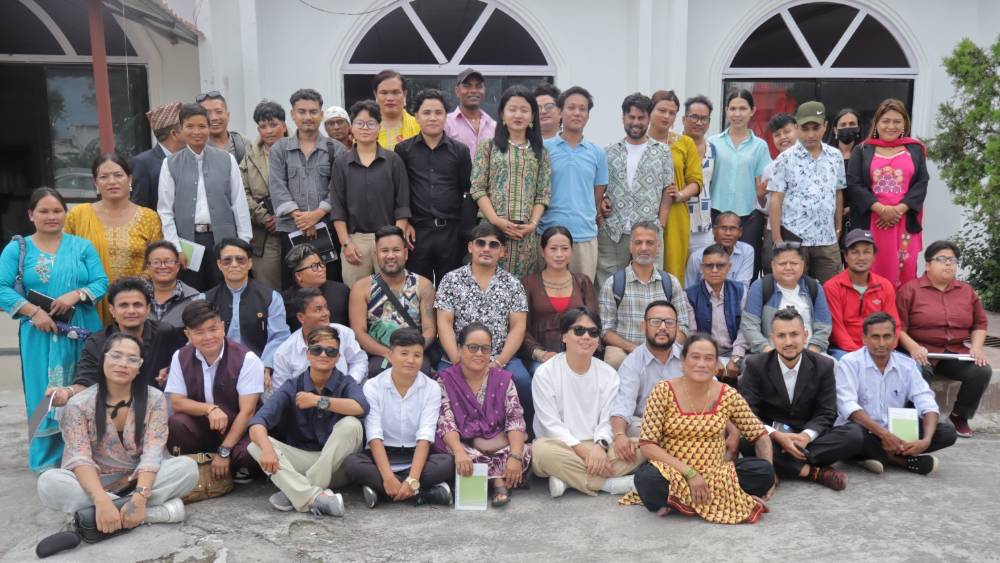
GSM communities across the country have joined the campaign initiated by Pant. Under Pant’s guidance, members of the GSM community are preparing to become political leaders at levels ranging from the local to the national; this initiative has received financial support from the European Union.
The National Federation of Sexual and Gender Minorities Nepal—an umbrella body of organizations such as Maya Ko Pahichan Nepal, Samabesi Manch Nepal, and Lead Nepal, which are implementing the ‘Breaking Barriers’ program in coordination with ActionAid—has announced this information.
Political activists from the GSM community have begun to mobilize with the aim of enhancing the community’s political literacy and creating an environment that enables them to assume leadership roles at all levels, from the local to the central.
They have also put forward a resolve to transform issues of social rights into a political agenda and ensure community representation at the levels of policymaking and state governance.
Copyright © All right reserved to pahichan.com Site By: Sobij.
