
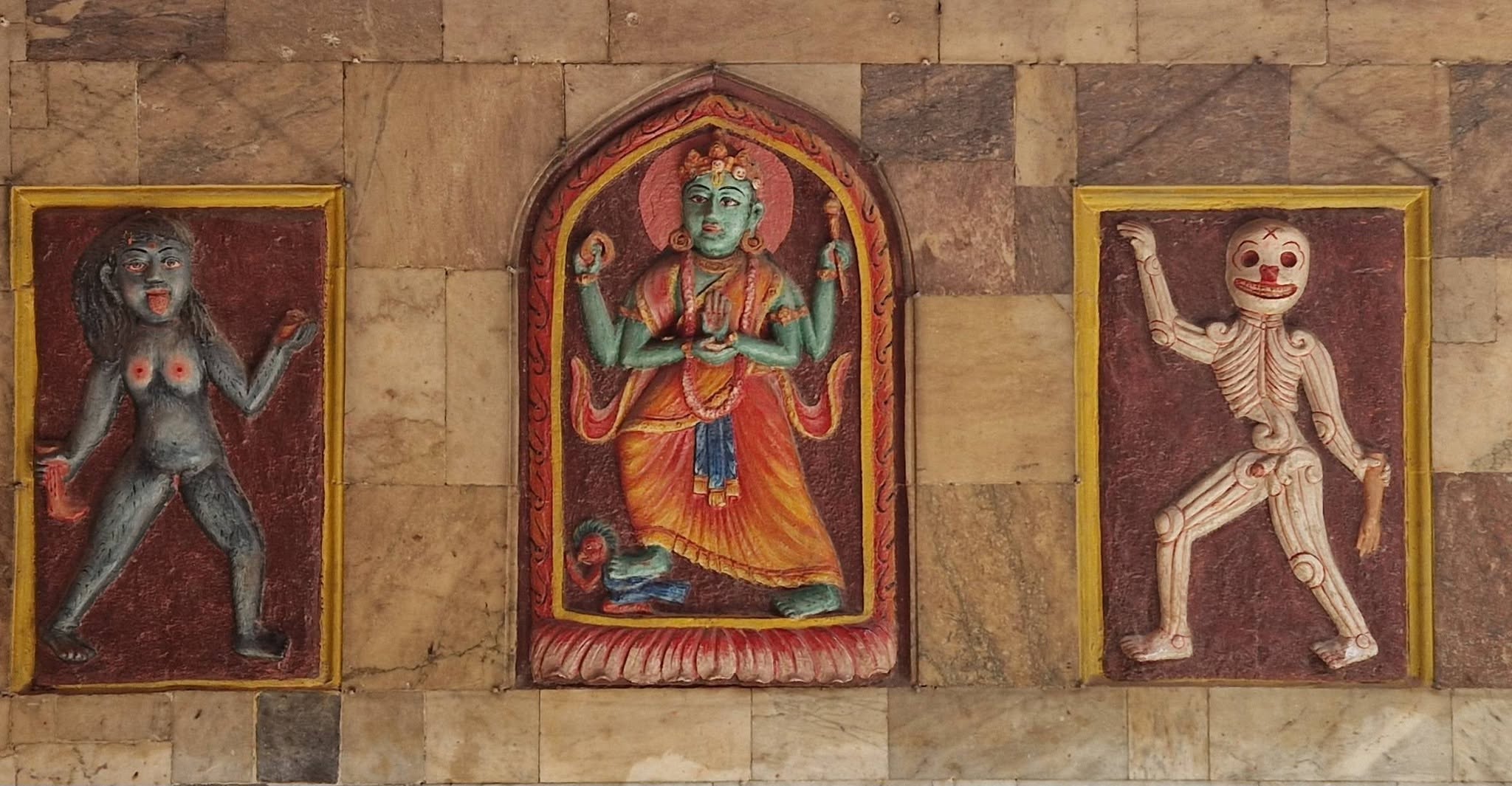
In the ancient sacred landscape of the Kathmandu Valley, gender was not necessarily imagined as a simple division between man and woman. The temples, images and symbols of Newar Hindu-Buddhist and Tantric traditions preserve a much more complex understanding of human nature—one in which different bodies, energies and qualities could coexist and occupy sacred space.
Among the most fascinating figures in this world are Khyaa and Kwancha, traditionally associated with Ajima shrines and sacred gateways. They are not merely decorative guardians. Their bodies themselves communicate something about the diversity of human nature.
1. Khyaa: A Body Beyond the Binary
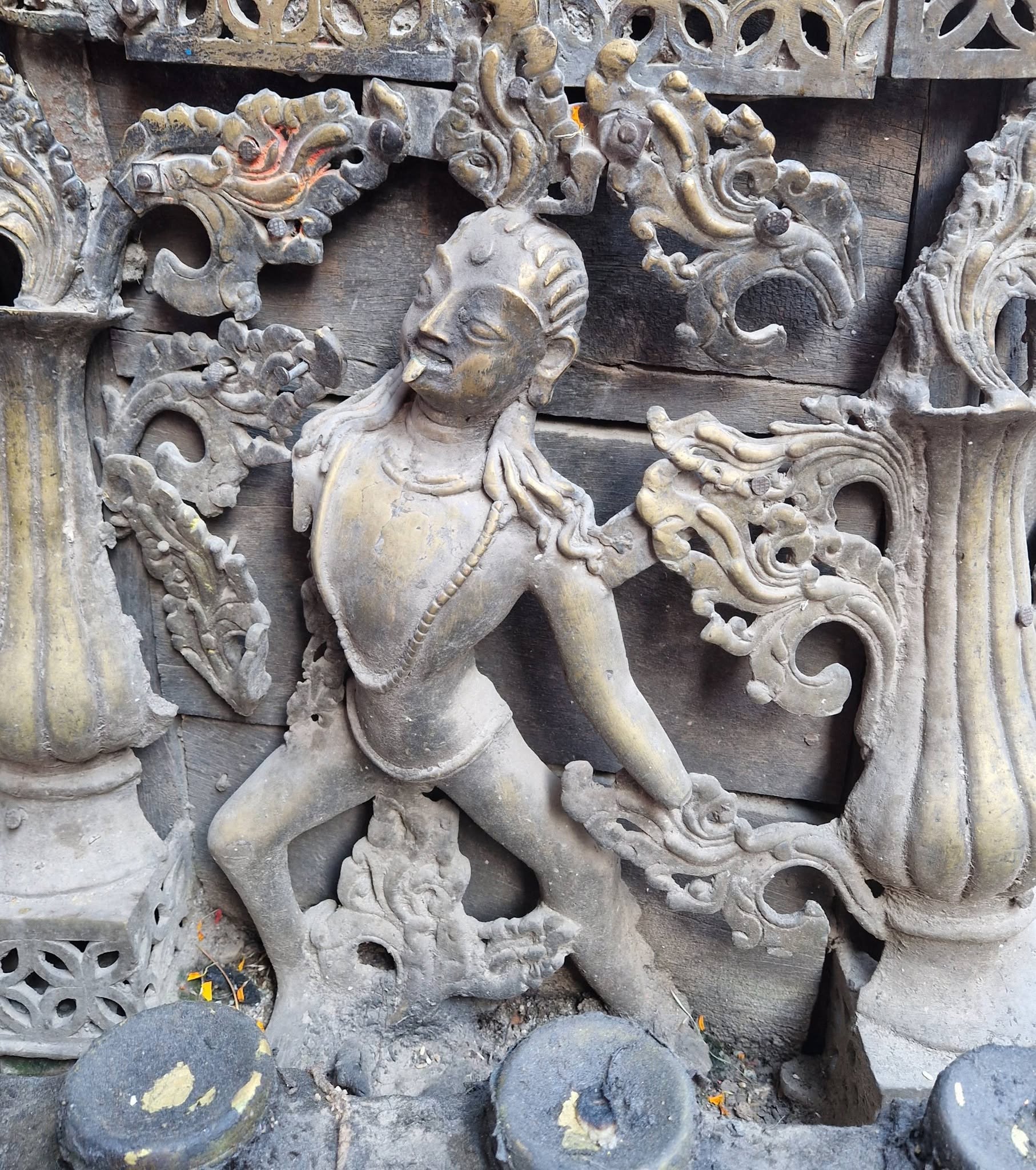
Khyaa can represent different forms of third-gender nature. A Khyaa may be a person born male whose body and nature develop feminine characteristics, or a person born female whose body and nature develop masculine characteristics. In some representations, these characteristics appear together in striking ways.
The important point is that Khyaa is not limited to one biological starting point. The concept recognizes that nature can produce bodies and gendered characteristics that do not fit neatly into the conventional categories of man and woman.
This is a profoundly different way of looking at gender diversity.
The body does not necessarily have to conform to two predetermined forms.
Nature itself is diverse.
2. Kwancha: The Powerful Masculine Principle
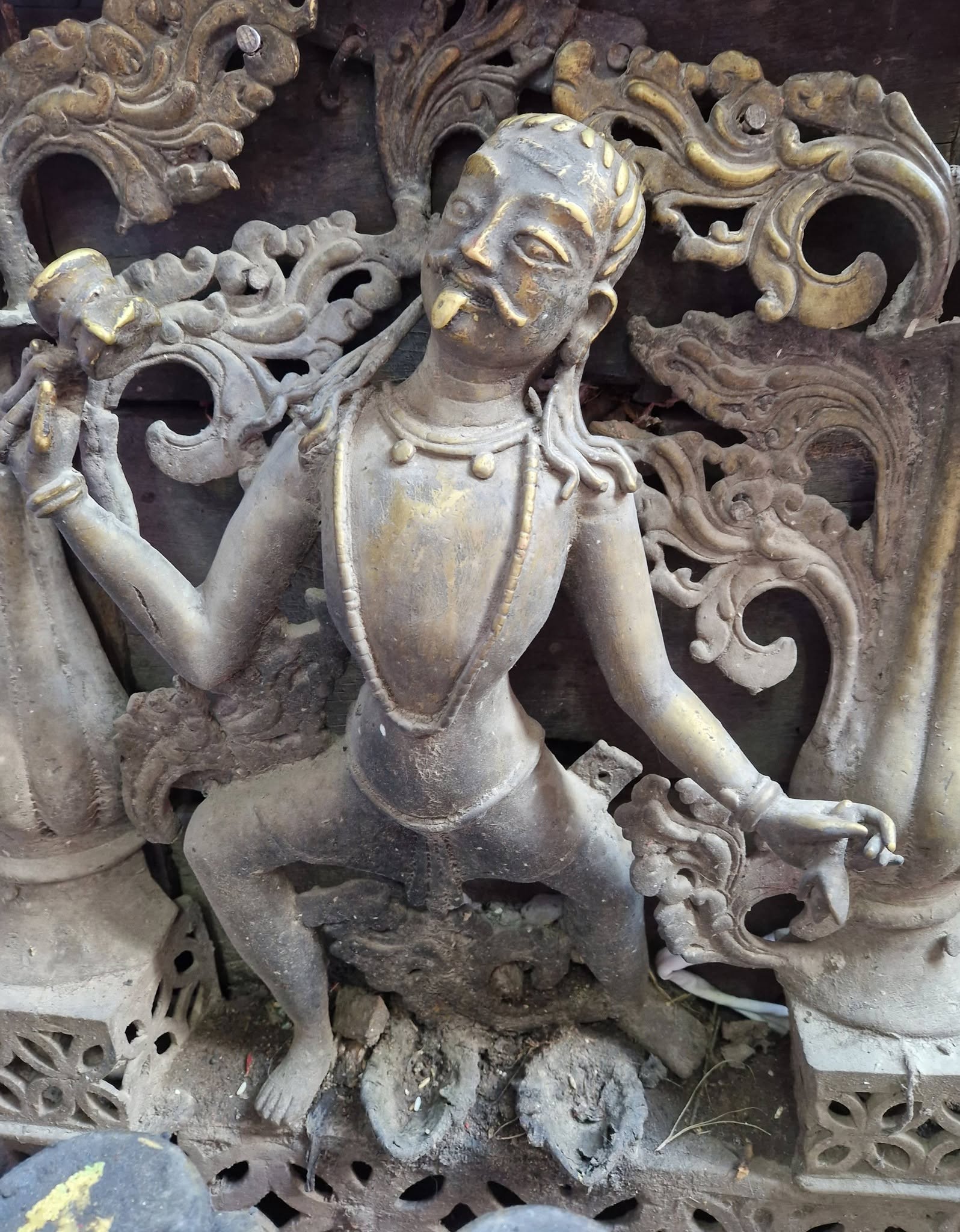
Kwancha presents a different form of gendered nature. The figure is thin and almost skeletal in appearance, with deep eyes and an extraordinarily developed male sexual organ. Yet Kwancha is not a dead body or a corpse. The skeletal appearance can instead be understood symbolically in relation to bones, physical structure and strength.
Thus, Khyaa and Kwancha represent different dimensions of human nature, particularly within the sacred world surrounding Ajima and other Tantric spaces.
They are guardians of the threshold.
And the threshold is significant. A doorway is neither completely inside nor completely outside. It is a place where different worlds meet. The presence of gender-diverse and extraordinary bodies at such sacred thresholds may therefore carry a deeper symbolism: those who cross ordinary boundaries can also become protectors of the sacred boundary.
3. Ganesh and Kumar: Intelligence and Strength
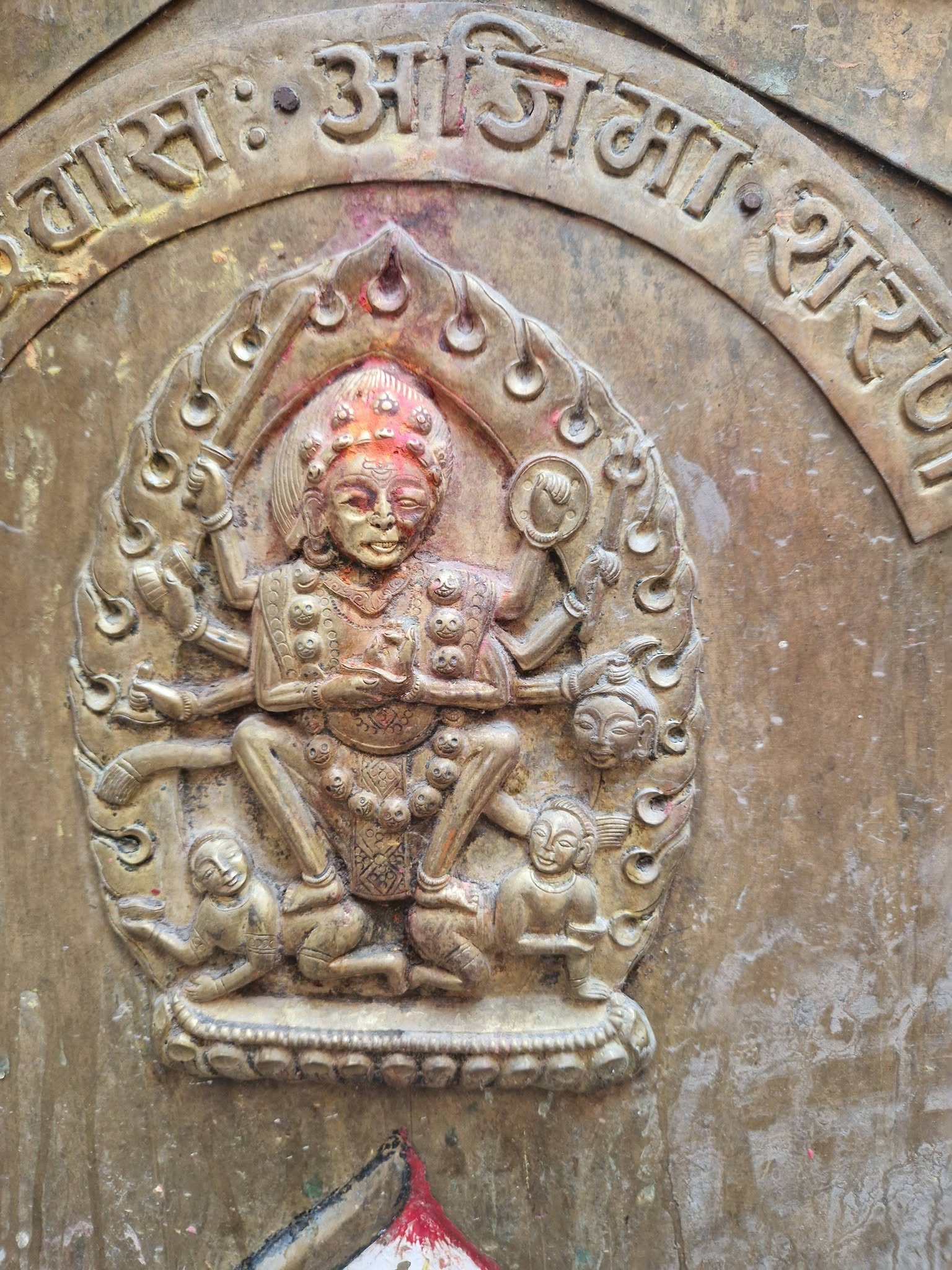
This understanding becomes even more interesting when we look at Ganesh and Kumar.
An ancient South Asian understanding of the human body held that different qualities came through mother and father: from the mother came blood, flesh and intelligence, while from the father came bones, physical structure and strength.
Whether understood as ancient physiology or symbolic philosophy, the idea provides a powerful framework.
Ganesh, born from Parvati alone, represents intelligence, wisdom, understanding and auspiciousness.
Kumar, is born from Shiva and Agni (both male gods), represents strength, courage, vitality, athleticism and martial power.
One is bulky and genius; the other is athletic and physically forceful.
The symbolism suggests two complementary dimensions of human nature.
But nature does not always keep these qualities separate.
Some people may embody predominantly masculine characteristics. Others may embody predominantly feminine characteristics. Others may possess combinations of both.
This is where third-gender nature becomes especially significant.
Third-gender people can be understood as blessed with qualities that cross the conventional division between masculine and feminine.
They are not incomplete men.
They are not incomplete women.
They are another expression of human nature.
4. Ganesh: The Deity of the Gender-Diverse Gana
The name Ganesh itself carries an important meaning: Gana + Isha—the leader or lord of the gana.
A gana is a group, community or multitude.
Ganesh is therefore the leader of the gana, the gender-diverse community.
Seen through this understanding, Ganesh’s relationship with gender-diverse beings becomes especially meaningful.
Ganesh is not simply a deity representing one narrow form of humanity. He is associated with a world populated by many different beings, bodies and energies.
His own body demonstrates extraordinary combination: a human body with an elephant head. He embodies difference without losing divinity.
And around sacred spaces associated with Ganesh, we encounter figures whose bodies similarly challenge the assumption that sacred humanity must look only male or female.
5. Ganesh and the Third-Gender Community
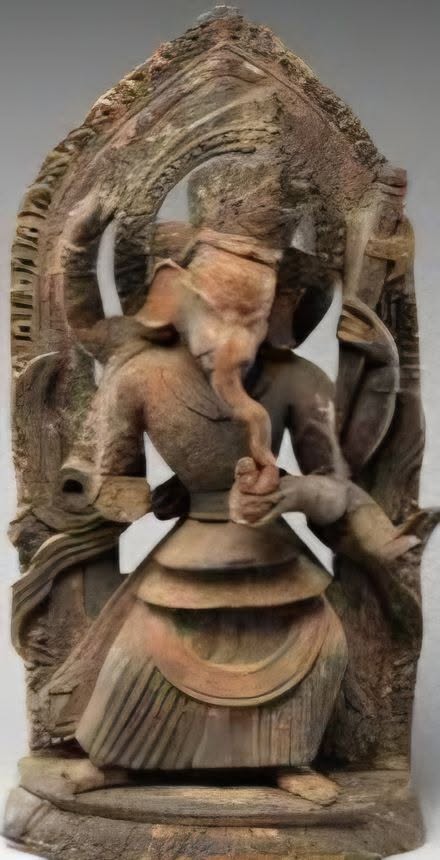
Ganesh can therefore be understood as a deity of all different third-gender people—including those born male, those born female, and those born intersex whose bodily and gendered nature develops differently from the conventional male–female categories.
This is not about forcing modern terminology onto ancient traditions.
It is about recognizing what the traditional imagery itself allows us to see.
The sacred world contains many kinds of bodies and many kinds of nature.
And those bodies are not necessarily pushed outside the temple.
They can stand at its entrance.
They can guard its doors.
They can stand beside its gods.
They can themselves become part of the sacred order.
6. The Ganesh Shrine at Indra Chowk
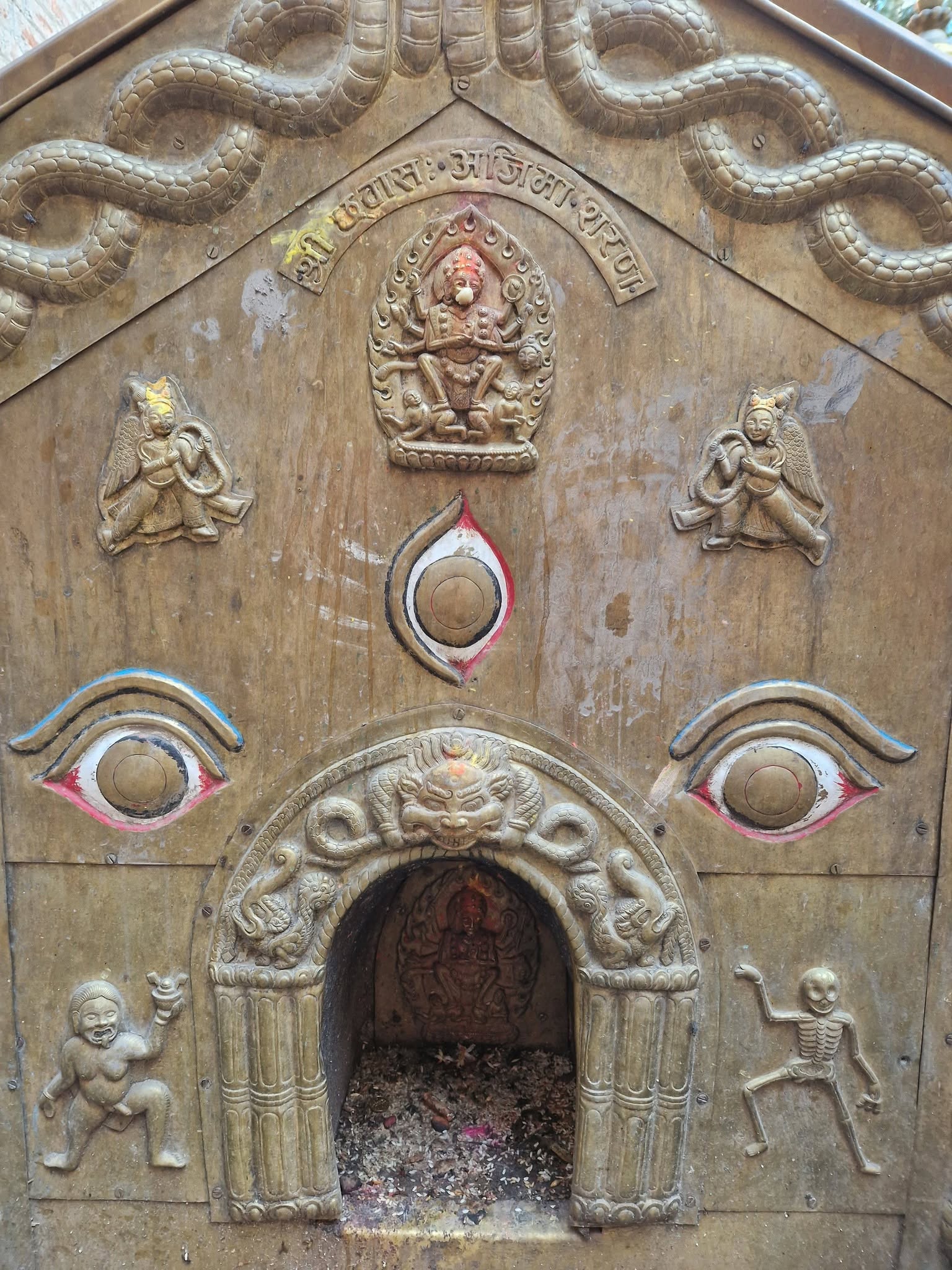
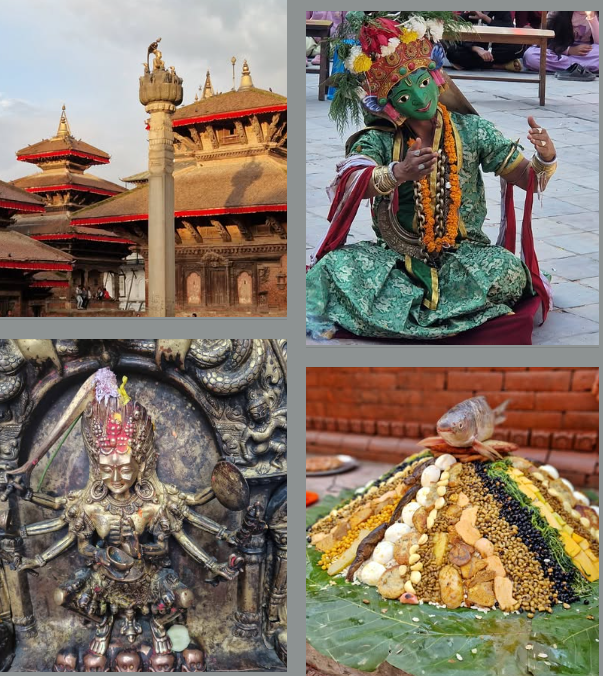
This becomes particularly striking around the Ganesh shrine near Indra Chowk, beside the Akash Bhairav temple.
The sacred structure is surrounded by a remarkable collection of figures—different from the ordinary representations of men and women. Among them are gender-diverse bodily forms, powerful guardians, enormous eyes and even skeletal figures.
Look carefully at the architecture.
Different forms of existence are gathered together around the sacred.
The gender-diverse figures are not simply outside society looking in. They are positioned as part of the protection and sacred environment itself.
This challenges the modern assumption that gender diversity is necessarily a recent social invention.
7. A South Asian Understanding of Diversity
The significance of these traditions is not that they provide a modern political definition of gender.
They do something more profound.
They remind us that human nature has always been more complicated than the categories societies create for it.
Before modern identity politics, before contemporary medical classifications, before the language of LGBTIQ+ movements, South Asian societies already had stories, images, rituals and social categories for people whose bodies and natures did not fit neatly into male and female.
The vocabulary was different.
The philosophical framework was different.
But the recognition of diversity was there.
8. Not a Mistake of Nature
Perhaps this is the most important lesson.
If we begin with the assumption that only two bodily natures are legitimate, every other form becomes an exception.
But if we begin with nature itself, we see something different.
Nature does not produce only two forms.
Nature produces variation.
It produces bodies that are masculine, feminine, both, neither, and bodies whose characteristics develop in ways that cross conventional boundaries.
The ancient sacred imagination did not necessarily need to erase this diversity.
It could place it at the doorway of the temple.
And perhaps that is why Ganesh is such a powerful symbol.
He is the leader of the gana—the multitude, the community of diverse beings.
He represents intelligence, prosperity, good fortune and auspicious beginnings.
And for generations, he has been worshipped across Hindu, Buddhist, Jain and Tantric traditions.
For those who see gender diversity through this indigenous sacred lens, Ganesh can therefore be understood as a deity who embraces and protects women, men and the many different third-gender natures within the human community.
The ancient images leave us with a powerful question:
What if gender diversity is not something humanity recently invented, but something nature has always created—and our ancestors knew how to place that diversity within the sacred?
Perhaps the answer has been standing at the temple doorway all along.

Copyright © All right reserved to pahichan.com Site By: Sobij.
