
As Nepal’s Prime Minister Balen Shah prepares to visit India and meet Indian Prime Minister PM Narendra Modi, perhaps there is a fascinating cultural story worth sharing—one that connects Nepal and India through something even more enduring than diplomacy: a shared divine heritage.
And this is a story that every devotee of Kashi’s Bhairav should hear.
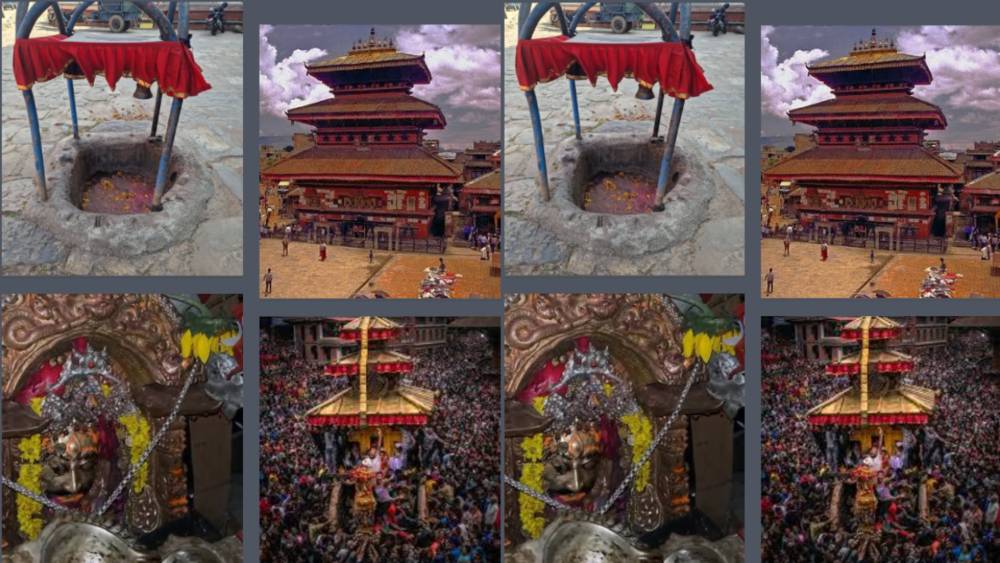
An extraordinary Newar legend that connects Bhaktapura (one of the three prominent city within Kathmandu valley) and Kashi through the divine body of Lord Bhairav.
There are many reasons to travel from Kashi to Bhaktapur. Some come to see its magnificent temples, some to experience its living Newar culture, and others to witness the spectacular Biska Jatra. But there is one reason that every pilgrim from Kashi should know.
1. The head of your Bhairav is in Bhaktapur.
Yes, the head!
According to a fascinating Newar legend, Lord Bhairav, the mighty guardian of Kashi, once travelled all the way from Varanasi to Bhaktapur. He had heard of the extraordinary Biska Jatra, a festival so magnificent, so vibrant and so full of divine energy that even a powerful god could not resist the temptation to witness it.
But Bhairav did not arrive with a divine procession or announce his identity. He came disguised as an ordinary visitor, hoping to enjoy the celebration unnoticed.
He watched the chariots, the crowds, the music, the rituals and the extraordinary energy of the city. Perhaps even the Lord of Kashi was captivated by the magic of Bhaktapur.
But gods may disguise themselves; their divine presence is not always so easy to conceal.
A tantric master of Bhaktapur recognised the mysterious visitor. He discovered that the stranger was none other than Bhairav himself.
2. What followed was no ordinary encounter.
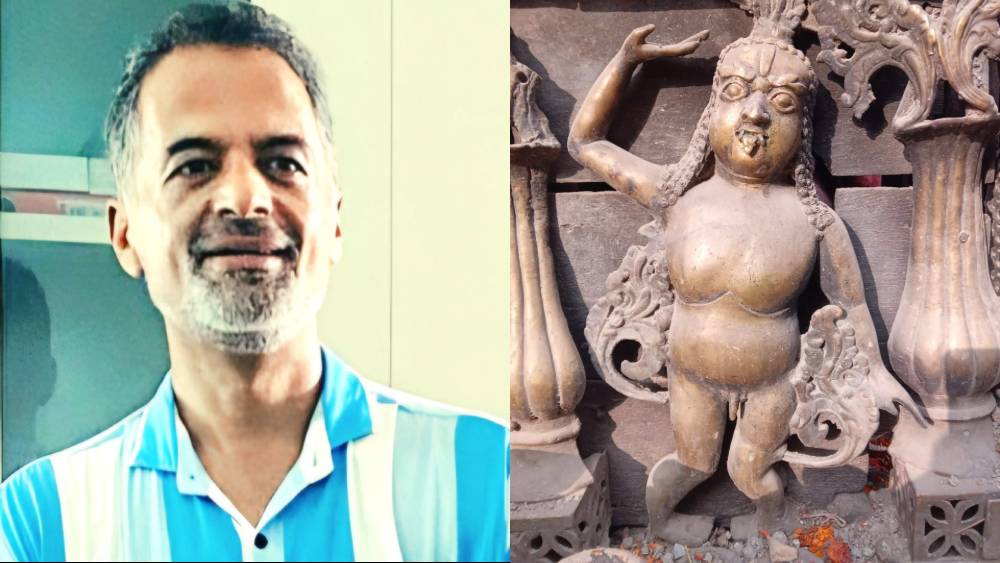
Bhairav attempted to escape and return to his sacred city of Kashi. But the tantric master, determined not to let such a powerful divine presence leave Bhaktapur, intervened. As Bhairav disappeared through an underground passage leading towards Kashi, his head was severed and remained in Bhaktapur, while his body escaped through the subterranean route.
And so, according to the legend, two sacred cities came to possess two parts of the same divine being.
Bhaktapur became the city of Bhairav’s head, while Kashi remained the city of his body.
3. The Tunnel That Connects Two Civilisations
But the story does not end with a severed head and an escaped body.
In Bhaktapur, the tradition remembers the very mouth of the underground passage through which Bhairav’s body escaped towards Kashi. It is a remarkable element of the local sacred geography: a physical point associated with an extraordinary connection between two ancient cities.
Think about what this means.
Kashi and Bhaktapur are not connected merely by pilgrims, traders, scholars, kings or cultural exchanges. In the sacred imagination of the Newars, they are connected through the very body of a god.
One city has his head; the other has his body.
One holds his face, his presence and his soul; the other holds his body.
And every year, this separation is ritually overcome.
4. The Annual Reunion: When Kashi Comes to Meet Its Head
During Biska Jatra, Bhairav’s body is brought from Kashi, according to the traditional belief, to reunite with his head in Bhaktapur.
Imagine the symbolism!
For most of the year, the divine body and head remain separated between two cities, two countries and two cultural landscapes. But when Biska Jatra arrives, the ancient connection comes alive again.
It is a reunion of the divine.
It is a reunion of Kashi and Bhaktapur.
It is a reunion of two civilisations that have maintained a spiritual relationship beyond political boundaries.
And perhaps this is the most beautiful invitation hidden within the festival:
People of Kashi, your Bhairav is waiting for you in Bhaktapur. Come and meet his head!
Come to the city where the face of your guardian deity is preserved. Come to witness the festival that once attracted your own god in disguise. Come to experience the living traditions of a civilisation that has maintained this extraordinary sacred relationship for generations.
5. Why Every Indian Should Visit Bhaktapur
India and Nepal share mountains, rivers, languages, philosophies, pilgrimage routes and thousands of years of cultural exchanges.
But perhaps there are stories that we have not told each other enough.
Most Indians know Pashupatinath, Muktinath and Janakpur. Many know Lumbini, the birthplace of Gautama Buddha. Yet how many know that Bhaktapur has a sacred connection with Kashi through the legendary body of Bhairav?
How many people from Varanasi know that the head of their Bhairav is worshipped in a magnificent medieval city in Nepal?
And how many have witnessed Biska Jatra, one of South Asia’s most extraordinary living cultural festivals?
Bhaktapur is not simply a destination for sightseeing. It is a living museum of Newar civilisation, where gods have temples, festivals have cosmic meanings, and ancient traditions continue to shape everyday life.
Here, you can experience the spectacular chariot procession of Bhairav, the erection of the mighty Yosin pole, the living traditions of the Ajimas, the extraordinary architecture of the Malla kings, and the spiritual world of Newar tantric culture.
You do not need to travel to another century. You only need to walk into Bhaktapur.
6. An Invitation to Kashi
Dear people of Kashi, Varanasi and all of India,
Next time you plan a pilgrimage to Nepal, do not stop at Pashupatinath.
Come to Bhaktapur.
Come to see the head of Bhairav.
Come to discover the underground passage of the legend.
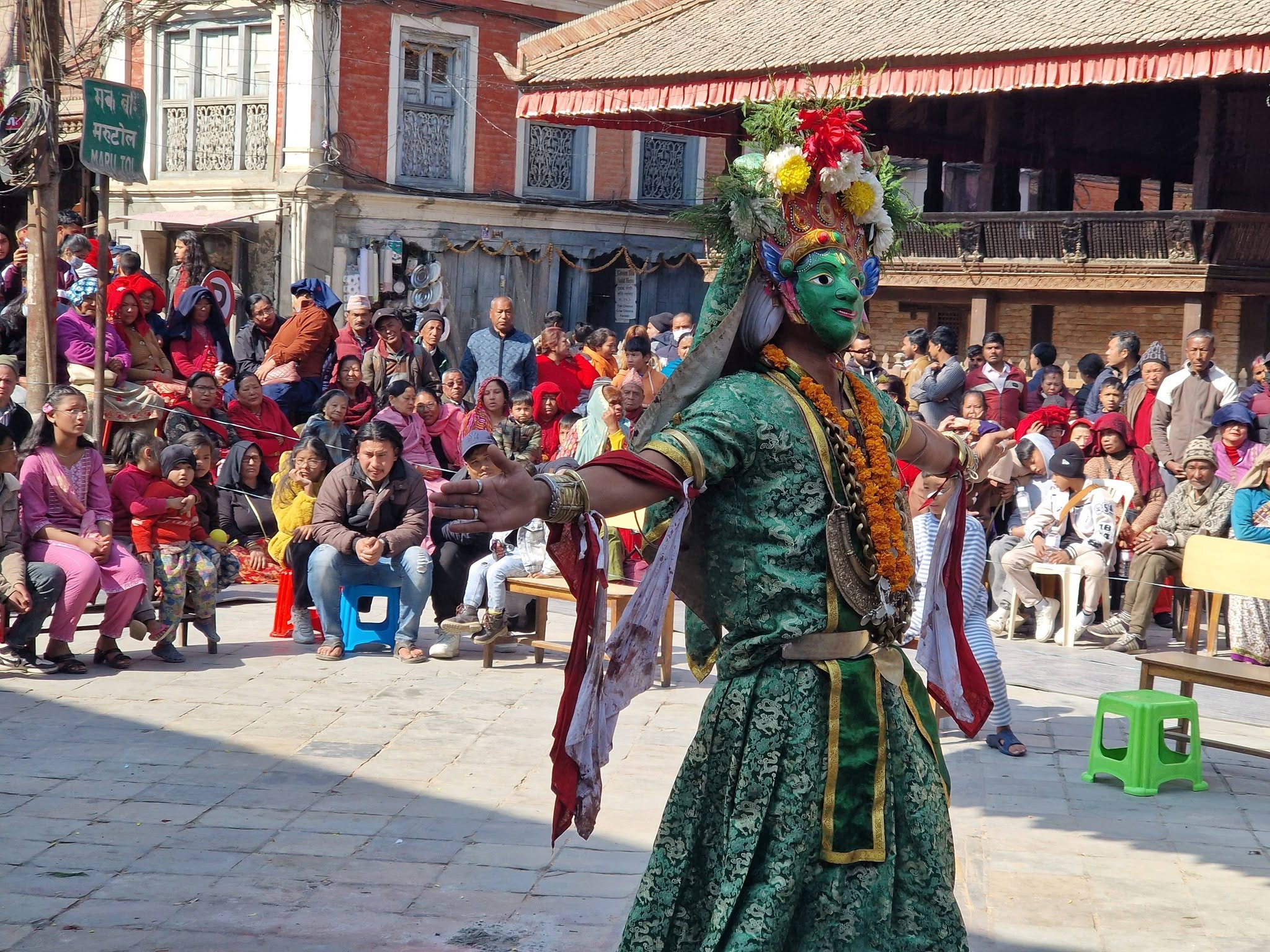
Come during Biska Jatra, when the city becomes a magnificent theatre of gods, humans, rituals, music, devotion and celebration.
And when you stand before Bhairav’s face in Taumadhi Square, remember this extraordinary story: the god who could not resist the beauty of Bhaktapur’s festival, the god who came in disguise, and the god whose head remained here while his body returned to Kashi.
Perhaps the people of Kashi should not think of Bhaktapur as a foreign destination at all.
It is the city where a part of your own god lives.
Kashi has his body. Bhaktapur has his head.
And every year, their ancient bond calls them together.
So, Kashi, come to Bhaktapur. Your Bhairav is waiting!

Copyright © All right reserved to pahichan.com Site By: Sobij.
