
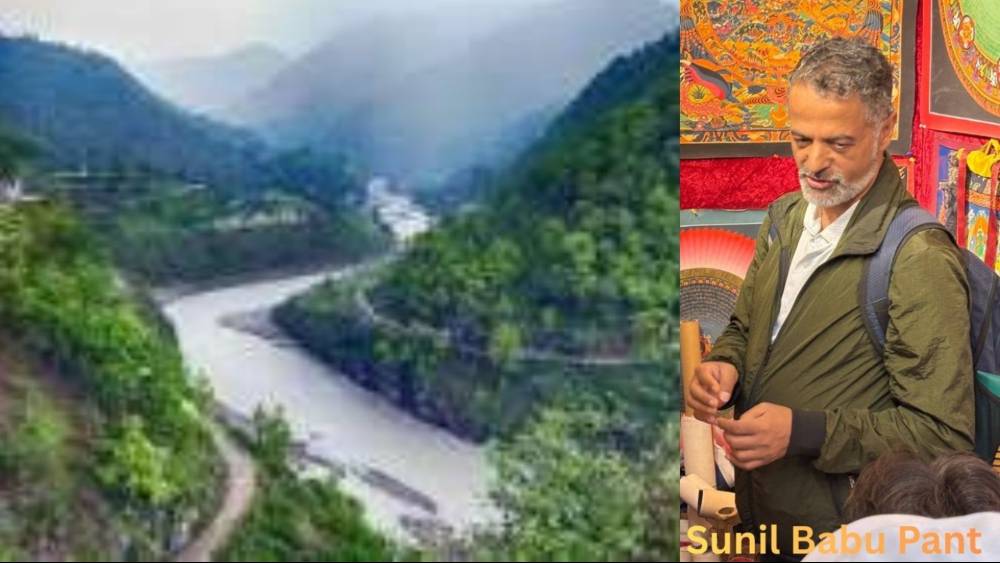
The next great crisis in South Asia will not be war or ideology—it will be water. As climate change disrupts monsoons, accelerates Himalayan glacier melt, and deepens cycles of flood and drought, Nepal and India stand at a historic crossroads: cooperate strategically, or drift together into ecological and economic instability.
This is no longer a future risk. It is already here.
1. A Region Running Dry Beneath Its Feet
The Indo-Gangetic Basin—binding Nepal’s हिमाल to India’s vast plains—is one of the most water-stressed regions on Earth. It accounts for roughly a quarter of global groundwater extraction, with billions of cubic meters disappearing each year. Across northern India, water tables are falling steadily; in many cities and agricultural belts, groundwater is being drilled deeper and deeper just to survive.
India, now the world’s largest groundwater user, relies on this invisible reserve to sustain its population and food systems. Agriculture alone consumes far more water than all other sectors combined, pushing aquifers toward collapse.
Nepal presents a striking paradox. With over 6,000 rivers and immense hydropower potential, it should be water-secure. Yet, due to a lack of storage and long-term planning, it faces dry-season shortages, especially in the Tarai and rapidly urbanizing Kathmandu Valley, where groundwater extraction is rising unsustainably.
South Asia is not running out of water—it is running out of the ability to manage it.
2. Floods and Droughts: Two Sides of the Same Failure
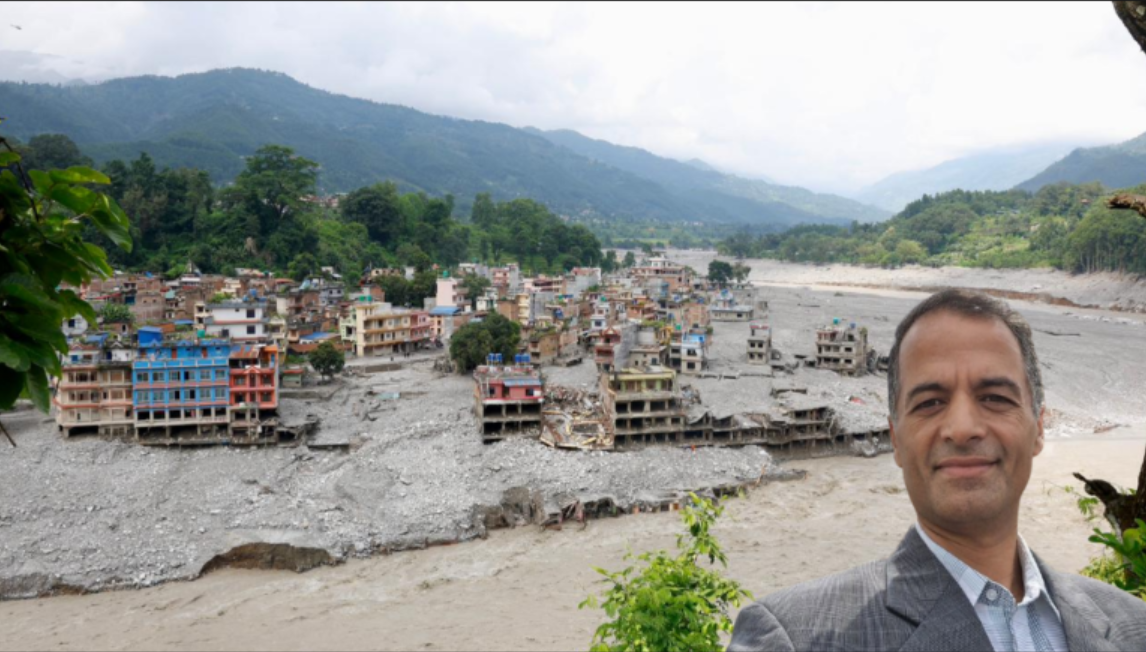
Every monsoon, Nepal’s rivers swell and rush southward. The Koshi basin alone brings devastation to millions in Bihar and eastern Nepal almost every year. Climate change is intensifying extreme rainfall, making floods more destructive and less predictable.
And yet, just months later, the same region faces drought.
Too much water in monsoon → floods
Too little water in dry season → drought
This is not a natural contradiction. It is a policy failure.
Without storage, water is not a resource—it is a recurring disaster.
3. The Missing Link: Storage and Shared Infrastructure
Nepal’s rivers carry enormous monsoon flows—most of which pass downstream unused. With strategic storage—large reservoirs like a High Koshi Dam and a network of medium-scale systems inspired by Kulekhani—this water could be transformed into a multi-purpose lifeline:
Clean hydropower for regional energy security
Irrigation for one of the world’s most densely populated agricultural belts
Reliable drinking water systems
Flood control during extreme rainfall
Drought resilience during dry months
These are not just development projects. They are climate survival systems.
4. A Practical Path: Build–Share–Transfer
The way forward is not charity or control—it is partnership.
A Build–Operate–Transfer (BOT) model offers a realistic, globally tested solution:
Joint Nepal–India (or India-supported) investment in reservoirs and hydropower
India receives a larger share of electricity (for example, 75%) for 25–30 years to recover costs
Full ownership and control are then transferred to Nepal
This is standard international practice.
For Nepal, it means:
Building large-scale infrastructure without unsustainable debt
Long-term ownership of strategic water assets
Job creation and economic transformation
Stabilized water systems across seasons
For India, it delivers:
Reliable clean energy
Reduced flood risks in downstream states like Bihar and Uttar Pradesh
Greater water security for agriculture and urban demand
This is not a compromise. It is a win–win architecture.
5. Water as Peace Infrastructure
Water cooperation can redefine Nepal–India relations.
Reservoir-based systems can:
Dramatically reduce flood damage downstream
Maintain river flows during dry months
Stabilize food production across the region
Provide drinking water security
Enable joint monitoring and early-warning systems
In this framework, water becomes more than a resource—it becomes peace infrastructure, binding two nations through shared survival and mutual benefit.
6. A Political Moment Nepal Cannot Miss
With the rise of Balendra Shah, Nepal is witnessing a generational political shift—from rhetoric to results.
Having emerged from urban governance, shaped by the lived realities of water scarcity, unmanaged rivers, flooding, and infrastructure gaps, the current leadership should understand something earlier politics often ignored:
water is not an abstract policy issue—it is a daily crisis.
This creates a rare political opening.
Nepal today has the opportunity to redefine its engagement with India—not from a position of fear or historical grievance, but from clarity, confidence, and strategic vision.
7. Hydro-diplomacy must move:
from suspicion → to structured cooperation
from reactive politics → to long-term planning
from symbolic nationalism → to material outcomes
Because the real test of sovereignty today is not isolation—it is the ability to secure water, energy, and resilience for one’s people.
8. The Real Crisis: Political Hesitation
The greatest barrier is not technical. It is political hesitation.
Past agreements have created mistrust in Nepal. India remains cautious about upstream control. Meanwhile, groundwater is depleting, floods are intensifying, and water quality is declining across the basin.
Climate change is accelerating everything:
Short-term → more floods
Long-term → less reliable water
The cost of inaction is rising every year.
9. The Urgency of Now
The Himalaya is changing. Rivers are becoming unpredictable. Old assumptions no longer hold.
Every monsoon, billions of cubic meters of water flow destructively through this region. Every dry season, the same region struggles with scarcity.
This is not nature’s failure. It is a failure of coordination.
Nepal and India face a clear choice:
Continue with mistrust, fragmentation, and recurring crisis
or
Build a shared future through bold hydro-diplomacy
If they succeed, they can create a global model for climate cooperation between upstream and downstream nations.
If they fail, the consequences will not just be economic—they will be humanitarian.
Water does not recognize borders.
The question is—can politics rise to that same truth?
Balen PMO Nepal PMO India Observer Research Foundation Ministry of Foreign Affairs, Nepal India in Nepal (Embassy of India Kathmandu)

Copyright © All right reserved to pahichan.com Site By: Sobij.
