1. A False Choice Framed as Liberation
A new debate has emerged globally following recent Indian developments around transgender law and the politics of self-identification. It is being framed as a progressive struggle between two opposing camps: one insisting that gender is fixed at birth, and another arguing that gender is purely self-identified—located in the mind, detached from the body.
At first glance, this appears to be a familiar battle between conservatism and progress.
But for many of us in South Asia—and across indigenous societies—this is a false choice.
Because both positions—“gender is only biology” and “gender is only identity”—are rooted in Western epistemologies. They emerge from specific historical, religious, and philosophical traditions that are not universal.
When imported wholesale into our societies, they risk producing a new form of colonialism—not imposed from outside, but internalized from within.
2. The Erasure of Indigenous Gender Worlds
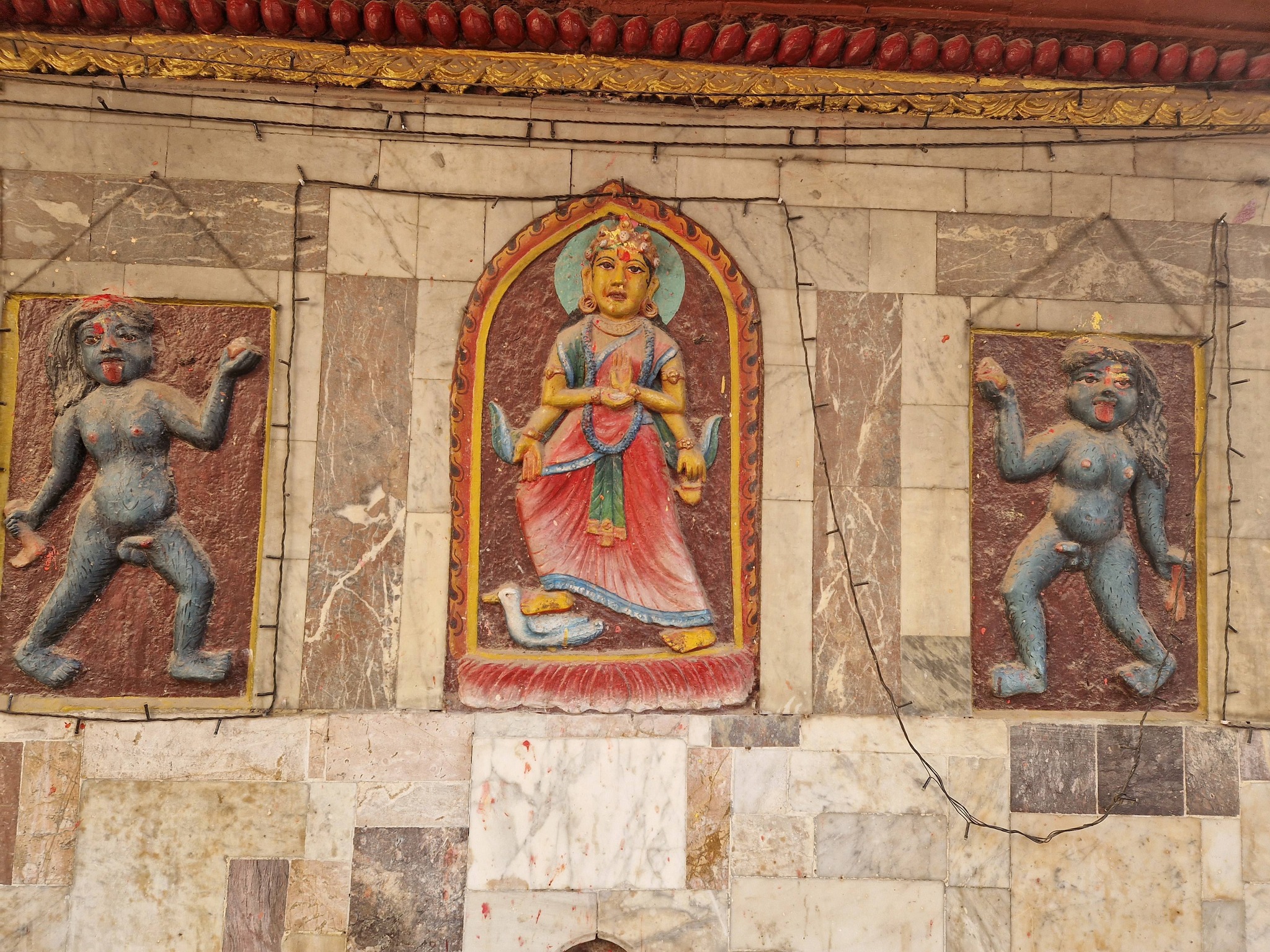
Long before terms like transgender, non-binary, or homosexual entered our vocabularies, South Asia held deeply nuanced understandings of human diversity.
Concepts such as Tritiya Prakriti (third nature), Kinnar, Napunsak, Kinnaari, Vipurushika, Sbhairini, and Pandak did not divide people into rigid categories of identity, orientation, and biology. Instead, they recognized that:
Human beings unfold across multiple dimensions
Gender is not a fixed destination, but a natural growing process
Diversity is not deviation—it is part of a cosmic and social order
In these traditions, a person was not forced to “become” a man or a woman. Nor were they reduced to a psychological identity detached from their embodied reality.
They were simply recognized as another way of being human.
3. Two Western Extremes, One Shared Problem
Today’s global discourse is dominated by two seemingly opposing frameworks:
1. Gender as Fixed Biology
Often reinforced by conservative interpretations rooted in Abrahamic traditions, this view reduces gender to genitalia assigned at birth. It dismisses lived experience, erases intersex realities, and enforces rigid social roles.
2. Gender as Pure Self-Identification
Emerging from highly individualistic liberal traditions, this framework treats identity as absolute—detached from the body, development, and social context, as if the self exists in isolation.
Despite their opposition, these frameworks share a deeper problem:
Both are reductionist
Both claim universal validity
Both erase cultural specificity and lived complexity
For indigenous societies, gender has never been an either/or.
It has always been both/and—and more.
4. Gender as a Holistic Reality
In Eastern and indigenous philosophies, gender is not confined to a single dimension. It is understood as a dynamic interplay of:
Biology (sex characteristics)
Physiology (development over time)
Psychology (self-perception)
Society (roles and relationships)
Culture (meanings and traditions)
Spirituality (cosmic understanding of existence)
To isolate one of these—whether body or mind—and declare it the ultimate truth is to misunderstand the human condition itself.
5. Law Without Culture Is Violence
The dangers of importing Western legal frameworks are not abstract—they are deeply material.
When laws are built on foreign categories:
They misclassify lived realities
They generate conflict within gender-diverse communities
They pressure individuals to adopt identities that are not their own
The growing divide between “third gender” and “transgender” identities in South Asia is not organic—it is produced through legal and linguistic imposition.
A person who might once have been comfortably recognized as third nature is now forced to choose:
Are you a man?
Are you a woman?
Or are you something defined by imported terminology?
This is not liberation.
It is epistemic violence.
6. The Language of Coloniality
Words are never neutral.
Terms like homosexual, transgender, and non-binary carry with them:
Western historical trajectories
Medicalized classifications
Judeo-Christian moral frameworks
When translated into Nepali and other South Asian languages, they often distort more than they clarify.
Meanwhile, our own languages already contain diverse, contextual, and non-binary ways of understanding human diversity.
To abandon them is not progress.
It is cultural erasure.
7. Self-Colonization in the Name of Rights
Perhaps the most uncomfortable truth is this: the push toward Western frameworks is often driven not by outsiders, but by our own institutions—activists, NGOs, and donor-driven agendas.
In the name of rights and global solidarity, we are:
Replacing indigenous knowledge with imported theory
Aligning with funding systems that demand Western categories
Performing identities that fit global narratives rather than local realities
This is not decolonization.
It is self-colonization.
8. Reclaiming Civilizational Confidence
The way forward is not to reject rights—but to re-root them in our own civilizational knowledge systems.
We must:
Recognize third gender and indigenous identities as distinct, not transitional
Allow multiple identity pathways without forcing binary outcomes
Ground laws in local history, culture, and lived experience
Resist one-size-fits-all global frameworks
This is not isolationism.
It is pluralism with dignity.
9. A Different Question
The global debate keeps asking:
Is gender determined by the body or the mind?
But perhaps this is the wrong question.
The real question is:
Can societies evolve to accept more than two ways of being human—without forcing them into borrowed frameworks?
10. Liberation Without Assimilation
For the Global South, justice will not come from choosing between Western extremes.
It will come from refusing the terms of the debate itself.
From remembering that:
We were never only male or female
We were never only body or mind
We were always more
And until our laws, languages, and movements reflect that deeper truth,
our freedom will remain partial, conditional, and incomplete.
Copyright © All right reserved to pahichan.com Site By: Sobij.
