Tourism today is no longer merely the movement of people across borders. It has become an expression of politics, perception, and power—subtle, but deeply consequential.
Borders are not defined only by geography anymore. They are shaped by diplomacy, trust, and strategic alignment. Air routes respond as much to geopolitical calculations as to commercial demand. And traveler confidence is now influenced as much by global headlines as by destination beauty.
For Nepal, this is not an external observation. It is an internal reality we must confront with clarity. Situated between two major powers—India and China—Nepal has always lived within geopolitics. But what is new is the intensity. Tourism, once relatively insulated, is now fully embedded within this global equation.
A world where mobility is politicized
The global tourism landscape is undergoing a quiet but fundamental transformation. Conflicts such as the Russia-Ukraine War have not only disrupted regional stability; they have reshaped global aviation routes, insurance frameworks, and even the psychology of travel itself. What was once predictable is now conditional.
Nepal is not part of these conflicts. Yet we feel their aftershocks. Longer flight paths, rising costs, and cautious traveler sentiment all filter into our tourism economy. Often, the hesitation is not about Nepal at all—it is about the uncertainty of the world we are connected to.
This distinction is important, but easily overlooked.
Connectivity: our structural challenge
Tourism depends on access. But access today is no longer purely technical—it is geopolitical. Our reliance on Tribhuvan International Airport reflects a deeper structural limitation. It is not just congestion or capacity. It is concentration of risk.
The new international airports—Pokhara International Airport and Gautam Buddha International Airport—represent ambition and foresight. But infrastructure alone does not guarantee connectivity.
Airlines make decisions based on stability, profitability, and geopolitical predictability. In other words, access is earned, not declared.
This is a reality Nepal must internalize more seriously than it has so far.
Visa regimes as strategic messaging
Visa policy is no longer administrative detail. It is diplomatic language. Nepal’s visa-on-arrival system remains one of its strongest assets. It signals openness in a world increasingly defined by restriction.
But openness alone is no longer enough. We need efficiency layered onto openness—digital systems, faster processing, and market-sensitive facilitation. In a global tourism economy defined by speed, delays are no longer neutral; they are competitive disadvantages.
This is where governance becomes economic strategy.
The Gen Z moment: visibility as double-edged power
One of the most significant but under-discussed shifts in Nepal’s tourism narrative is the rise of its youth as a visible political and digital force. The Gen Z-led civic movement of 2025 in Nepal reflected a generational demand for accountability, transparency, and institutional responsiveness. It was domestic in origin, but global in visibility. And this visibility matters.
In today’s digital environment, perception is not formed slowly—it is formed instantly. Often without context.
For international audiences, Nepal is no longer represented only through mountains and trekking routes. It is also represented through civic expression, digital activism, and generational voice. In the short term, this can create misinterpretation. Any visible movement risks being read as instability by risk-sensitive travelers. That is the reality of perception economies.
But we should not stop at the short-term reading. Because in the longer arc, something more important is taking shape. A politically aware, digitally literate youth does not weaken national image. It modernizes it. It signals a society that is engaged, vocal, and evolving—not stagnant. In global tourism, this matters more than we often acknowledge.
Soft power today is not only built through culture. It is built through societal character.
And in that sense, Nepal’s Gen Z is not outside the tourism narrative. It is becoming part of how the world reads Nepal.
Geography still matters—but narrative decides value
Nepal’s geographic position remains one of its strongest strategic advantages. Between India and China, Nepal occupies a rare diplomatic space. In an increasingly fragmented world, neutrality is not weakness—it is positioning.
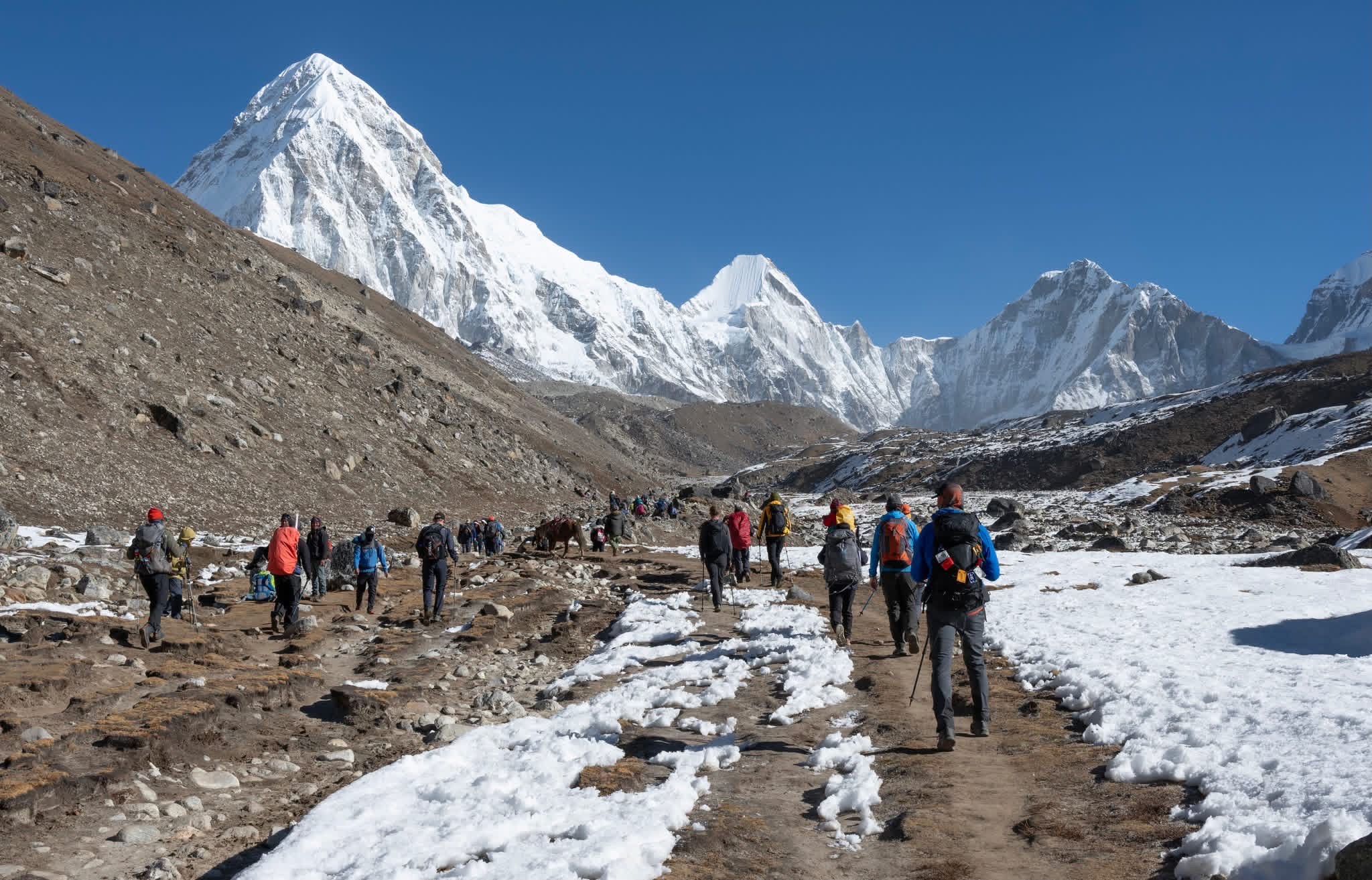
Tourists today are not only seeking beauty. They are seeking meaning, stability, and authenticity. From Mount Everest to the stark isolation of Upper Mustang and the remoteness of Dolpo, Nepal offers experiences few countries can replicate.
But experience alone is not enough. What converts experience into sustained tourism strength is narrative clarity.
The branding deficit we rarely admit
Let us be honest. Nepal’s challenge is not visibility. It is coherence. We are seen, but not always understood consistently.
Institutions like the Nepal Tourism Board must move beyond promotion. The task now is strategic narrative construction. Tourism branding in the 21st century is not about imagery alone. It is about integrated storytelling—across diplomacy, media, and lived visitor experience.
If we do not define ourselves clearly, others will define us incompletely.
Regional integration: an unfinished opportunity
Tourism cannot grow in isolation from regional mobility. Platforms like the South Asian Association for Regional Cooperation remain underutilized. Yet they hold the potential to create integrated travel circuits across South Asia.
Such connectivity would allow Nepal to move from being a destination to becoming a node in a wider regional experience economy.
But this requires political will that extends beyond tourism departments.
Policy direction: what must change
Three shifts are now necessary—not optional.
First, aviation must be treated as diplomacy. Connectivity is a geopolitical asset, not just an infrastructure outcome.
Second, perception management must be institutionalized. Nepal needs structured capacity for global narrative engagement and crisis communication.
Third, youth must be integrated into soft power strategy. The Gen Z generation should be seen not as a reputational risk, but as representational capital.
Conclusion
Tourism in the age of geopolitics is no longer about arrivals and departures. It is about positioning, influence, and perception.
For Nepal, the question is not whether geopolitics affects tourism. It already does, deeply and continuously. The real question is whether we will remain reactive to it—or begin to use it strategically.
Because in today’s world, the most successful tourism destinations are not only naturally gifted.
They are strategically self-aware.
(Geeta Sharma is from Kathmandu, Nepal. Along with her sister and family, she has been running RajBala Treks & Expedition since 2009.)
Copyright © All right reserved to pahichan.com Site By: Sobij.
