Nepal is not struggling because it lacks democracy. It is struggling because it has hollowed democracy out from within. Rules exist, but they are negotiated in backrooms. Laws exist, but they are bent by the powerful. Institutions exist, but they have been captured by a stagnant, self-serving elite.
When a system becomes performative—a mere theater of procedures with no tangible justice—people stop believing in it. That is the precise moment they stop looking for someone to manage the system and start looking for someone to override it.
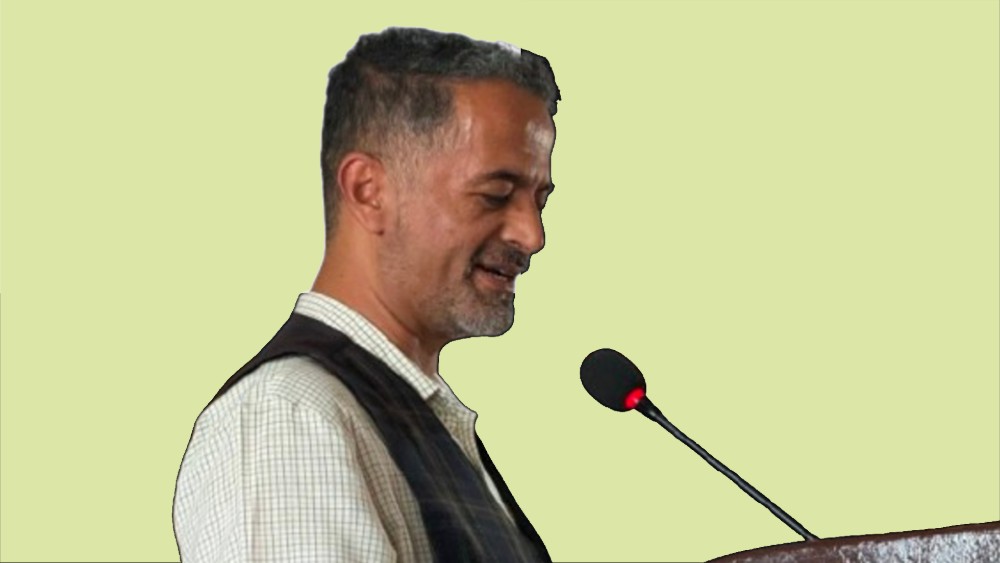
The rise of the “strong leader” in 2026 is not a political accident; it is the logical, inevitable outcome of decades of elite impunity. Figures like Balen Shah are the answer to politicians who treated power as an entitlement, bureaucrats who used delay as a form of corruption, and business networks that thrived on proximity rather than merit.
This moment is not merely about one man; it is about a moral and institutional vacuum that finally collapsed under its own weight.
1. The Uncomfortable Truth: Political Gravity
When a society loses moral discipline, it does not demand more sub-committees or parliamentary debates. It demands control.
When theft and corruption become normalized, people want punishment.
When systems stall for years, people want speed.
When elites act without consequence, people want someone who can impose consequences.
This is not abstract political theory; it is political gravity. However, this is also where the danger begins. The same public frustration that creates a “strong leader” can just as easily be used to justify unchecked power. That is where many societies make their fatal, irreversible mistake: they confuse discipline with domination.
2. The Wisdom of the Mahasammata
The Buddha diagnosed this cycle over two millennia ago. In the Aggañña Sutta, the story of the first ruler—Mahasammata—is not a celebration of absolute authority; it is a clinical warning about its boundaries.
The people did not choose a king because they wanted a master; they chose a leader because society was collapsing into greed, theft, and anarchy. They gave him power to restore order, but they did not surrender their sovereignty. They gave him a mandate to be jimmewarimulak (responsible) to the community.
Crucially, the Mahasammata was “hired” by the people to perform a specific function: to show indignation only where it was right, and to restore the Dhamma—the social and moral order. He was the “Great Elect,” bound by the conditions of his contract. He was a public servant with a crown, not a deity above the law.
3. 2026: The Case for the “Great Elect”
The early signs of this new administration suggest a desire to institutionalize discipline rather than just personalize it. The 100-Point Reform Agenda—specifically the push to de-politicize civil service and ban partisan unions—is a direct attempt to fix the system by making it function through rules rather than political proximity.
Furthermore, the “State Apology” to the Dalit community suggest an effort to restore a moral fabric grounded in justice. By sweeping mandates across traditional ethnic divides, the leadership currently mirrors the Mahasammata’s role: a leader chosen by the whole people to protect the common interest.
4. The Warning Signs of the “Great Eraser”
Yet, the danger of a near two-thirds majority is that it removes the friction necessary for a healthy democracy. We must ask: Is discipline being institutionalized—or is it being personalized?
The “bulldozer” reputation, while popular, remains a significant risk. If efficiency begins to bypass judicial oversight or suppress dissent in the name of “speed,” the discipline becomes domination.
The litmus test is simple: Is the leader building a Nepal that can eventually run smoothly without him?
If the goal is to build a bureaucracy where the law applies equally to a land-mafia billionaire and a common citizen, then order is being restored.
But if justice only happens when the leader personally intervenes, the foundation is being laid for a personalist dictatorship.
5. The Final Warning
The real question for Nepal is no longer “Do we want a strong leader?” That ship has already sailed. The real question is: Will this strength rebuild the system, or will it replace it?
The elites who now whisper about “authoritarian tendencies” are the very ones who created the conditions for this shift through their own arrogance. They do not get to break the system and then complain when the people want someone to force it to work.
However, the public must also be wary. A society that outsources its morality to a single individual will eventually lose its freedom. The lesson from the Aggañña Sutta is that even the first ruler was bound by conditions. Nepal must remember that before the “strong hand” becomes a closed fist.
We need a leader who makes the law work—not a leader who makes the law irrelevant. Power does not remain pure; it expands. It is now up to the Great Elect to ensure his legacy is a restored system, not just a stronger throne.

Copyright © All right reserved to pahichan.com Site By: Sobij.
