The United Kingdom’s evolving legal guidance around transgender access to single-sex spaces reveals a deeper crisis at the heart of Western gender politics. The debate is often framed as a conflict between women’s rights and trans rights, safety and identity, biology and self-definition. But beneath these arguments lies a more uncomfortable truth: the West remains trapped inside a rigid binary imagination.
Male or female. Cis or trans. Body or identity.
The updated draft guidance from the Equality and Human Rights Commission, following the UK Supreme Court interpretation of “biological sex” under the Equality Act, allows trans people to be excluded from certain single-sex spaces. Yet the same system offers very limited structural alternatives. This creates a profound contradiction: if transgender people are barred from facilities aligned with their gender identity, but no meaningful non-binary or gender-diverse infrastructure exists, what remains is not inclusion but exclusion.
The question is not simply who can enter which toilet or changing room. The question is whether society is willing to acknowledge that human diversity extends beyond two fixed categories.
1. The Cost of Maintaining the Binary
Modern Western states were built around administrative simplicity. Binary gender systems made bureaucracy easier: two categories for passports, schools, prisons, sports, hospitals, public toilets, and data collection.
But simplicity is not neutrality.
The binary system privileges those who fit neatly within it while forcing everyone else into conflict, invisibility, or marginality. Even contemporary “progressive” Western approaches often remain confined within this structure. Transition is increasingly recognized—but usually as movement from one side of the binary to the other. The system itself remains intact.
This is why debates in the UK increasingly appear trapped in endless cycles:
Are trans women “really” women?
Should trans men enter men’s spaces?
Which body belongs where?
These questions emerge because the framework itself is too narrow.
If a society recognizes only two legitimate categories, then every person who exists outside those categories becomes a “problem” to be managed.
2. Nepal’s Different Historical Experience
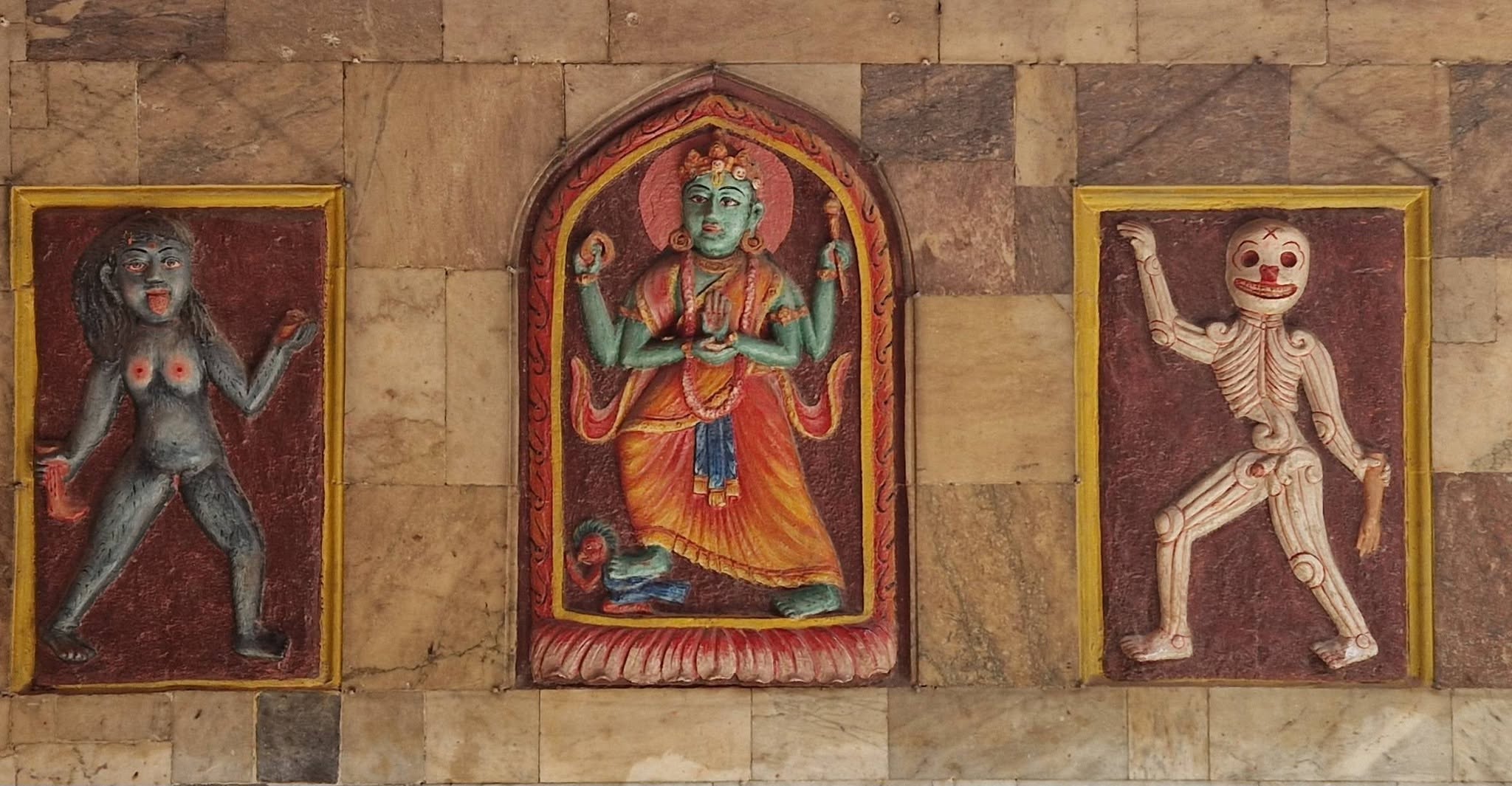
Countries like Nepal offer a different historical perspective. South Asian societies were never perfectly egalitarian in modern history, but many contained more much wider and flexiable understandings of gender diversity long before modern Western identity frameworks emerged.
In Nepal, the legal recognition of a third gender did not arise from importing a new concept. It emerged partly from acknowledging realities already embedded in culture, spirituality, and social history. Gender-diverse individuals never existed as medical identities but as social, ritual, and cultural beings.
When Nepal’s Supreme Court recognized third gender rights in 2007, critics often raised concerns about cost:
Would separate facilities be required?
Would institutions need redesigning?
Could the state “afford” inclusion?
Yes the real question was not only affordability but It was also about political un/willingness.
Because exclusion also has a cost:
Increased violence,
Mental distress,
Social alienation,
Homelessness,
Discrimination in healthcare and employment,
Constant public humiliation,
These costs are simply pushed onto marginalized individuals instead of absorbed collectively by society.
3. Exclusion Without Alternatives Is Injustice
If the UK chooses to preserve single-sex facilities based strictly on biological definitions, then justice requires investment in additional infrastructure for gender-diverse people.
Otherwise, transgender and non-binary people are effectively told: “You cannot use this space, but we will not create another one either.”
That is not equality. That is institutional abandonment.
The solution cannot simply be to police bodies more aggressively. Nor can it be endless public suspicion about who belongs where.
4. The solution is expansion.
More private facilities. More gender-neutral facilities. More flexible institutional design. More nuanced legal categories. More recognition that human diversity exceeds Victorian administrative boxes.
Single-sex facilities can coexist with gender-diverse infrastructure—but only if governments are willing to invest in it.
5. The Limits of Western Gender Wars
The current Western debate is increasingly polarized because it remains trapped inside a binary logic inherited from patriarchal systems. One side prioritizes anatomy. Another prioritizes identity. But both often continue assuming there are only two legitimate destinations.
This creates permanent social tension because reality is more complex than either framework allows.
Many Indigenous cultures and non-Western societies historically recognized people who lived between, beyond, or outside male and female categories entirely. These identities were not always understood through modern LGBTIQ+ terminology. Nor were they always reduced to medical transition.
The Western model increasingly exports a standardized framework globally:
binary sex categories,
medicalized transition pathways,
legal reassignment from one category to another.
But this can erase older traditions of plurality.
The future should not force humanity to choose only between “biology” and “identity.” It should recognize diversity itself as a social reality deserving institutional support.
6. Beyond Cheap Inclusion
What is unfolding in the UK is not only a legal debate. It is a test of whether modern democracies are prepared to evolve beyond minimalist inclusion.
A society cannot claim fairness simply by restricting access more carefully. It must also ask:
Who is left without dignity?
Who is left without safety?
Who is left without any place at all?
If Western governments genuinely wish to preserve certain single-sex services while respecting non-binary and transgender rights, then they must move beyond the binary entirely and invest in broader gender-diverse systems.
Not as charity. Not as symbolic inclusion. But as democratic infrastructure.
Human diversity has always existed. The real issue is whether states are willing to design societies capable of accommodating it.

Copyright © All right reserved to pahichan.com Site By: Sobij.
