
In today’s global conversation about freedom, progress, and human fulfillment, the modern Western worldview often dominates the stage. Success is measured through rights secured, wealth accumulated, technologies invented, and institutions strengthened. Liberation is imagined as political emancipation, social mobility, and material abundance. The ideal citizen is empowered, protected by law, and free to pursue individual desire.
Yet across much of Asia, another civilizational imagination has endured for thousands of years — one that asks a profoundly different question. Not “How much can we gain?” but “How much can we let go?”
This difference is not merely philosophical. It shapes politics, economics, ethics, relationships, and even the emotional life of societies.
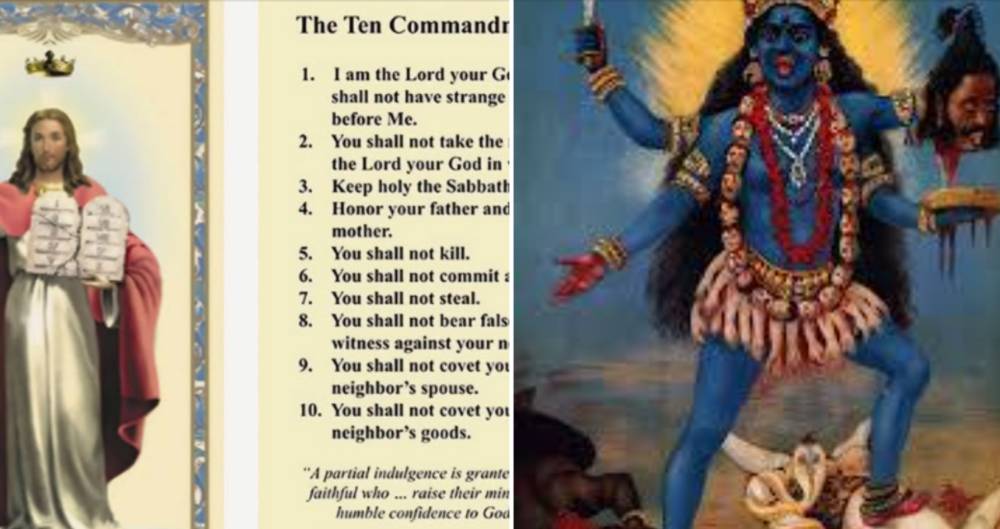
The Western concept of liberation emerged largely from Abrahamic and Greco-Roman traditions. In the biblical imagination, humanity moves toward a promised condition often symbolized as a “land of milk and honey” — a place of security, prosperity, and divine favor. Over centuries, this evolved into political modernity: rights, constitutions, democracy, capitalism, and legal equality. Freedom became deeply connected with ownership, productivity, mobility, and personal autonomy.
Law occupies a sacred position in this worldview. One obeys commandments, constitutions, contracts, and institutional rules. Morality is frequently externalized into systems of legality and rights. Success itself becomes morally celebrated: expansion, achievement, visibility, and influence are signs of advancement.
The East — especially within Hindu, Buddhist, Jain, Taoist, and other Dharmic traditions — developed a very different civilizational psychology.
Here, the highest liberation is not heaven, wealth, or even political freedom. It is moksha, nirvana, kaivalya — states beyond attachment, ego, craving, and karmic entanglement. The goal is not accumulation but release.
In this worldview, suffering is not primarily caused by lack of rights or resources, but by ignorance, attachment, ego, greed, and imbalance. The human being is trapped not mainly by oppressive institutions, but by the restless mind itself.
Thus, while the West often asks how to change society, the East asks how to transform consciousness.
This does not mean Eastern traditions ignored social justice or material realities. Ancient Asian civilizations built vast kingdoms, trade routes, legal systems, and sophisticated economies. Nor does it mean the West lacks spirituality or introspection. Christian monasticism, Stoicism, and mysticism also emphasized renunciation and inner purity.
But the civilizational emphasis differs.
Western societies generally reward visibility, ambition, expansion, and competition. Eastern traditions historically admired restraint, discipline, humility, and detachment. A billionaire entrepreneur may become a cultural hero in one civilization; a wandering monk with no possessions may become the ideal in another.
Even ethics are framed differently.
In the West, morality is often connected to obedience to divine commandments or legal norms: what is lawful, permissible, or prohibited. In the East, morality is more frequently linked to karma and wisdom: whether actions create attachment, suffering, imbalance, or clarity of mind.
One tradition says: obey the law.
The other asks: purify the self.
One seeks justice through external structures.
The other seeks liberation through internal awakening.
Modern globalization, however, has destabilized both traditions.
The West, despite its extraordinary achievements in human rights, science, and governance, increasingly faces epidemics of loneliness, anxiety, consumerism, ecological destruction, and emotional exhaustion. Material abundance has not necessarily produced inner peace.
At the same time, many Eastern societies are rapidly abandoning their contemplative traditions in pursuit of Western-style development. Ancient cultures that once valued simplicity and spiritual discipline now increasingly measure worth through consumption, status, and economic growth.
As a result, both civilizations appear spiritually incomplete.
A purely material vision of liberation risks producing societies that are technologically advanced yet emotionally hollow. But a purely inward or karmic understanding of suffering can also become passive, ignoring injustice, inequality, and structural oppression.
Perhaps the future requires synthesis rather than superiority.
The West’s commitment to human rights, equality before law, and political accountability remains one of humanity’s greatest achievements. But the East’s understanding of detachment, mindfulness, impermanence, and inner balance may offer essential correctives to a civilization consumed by endless desire.
Human beings need both dignity and depth.
Both rights and wisdom.
Both justice and inner peace.
A civilization that only seeks external freedom may never escape internal suffering. But a civilization that seeks only spiritual transcendence may fail to confront material injustice.
The challenge of the 21st century may therefore not be whether East defeats West, or West modernizes East, but whether humanity can rediscover a more balanced understanding of liberation itself — one where prosperity does not destroy peace, and spirituality does not ignore suffering in the world.

Copyright © All right reserved to pahichan.com Site By: Sobij.
