
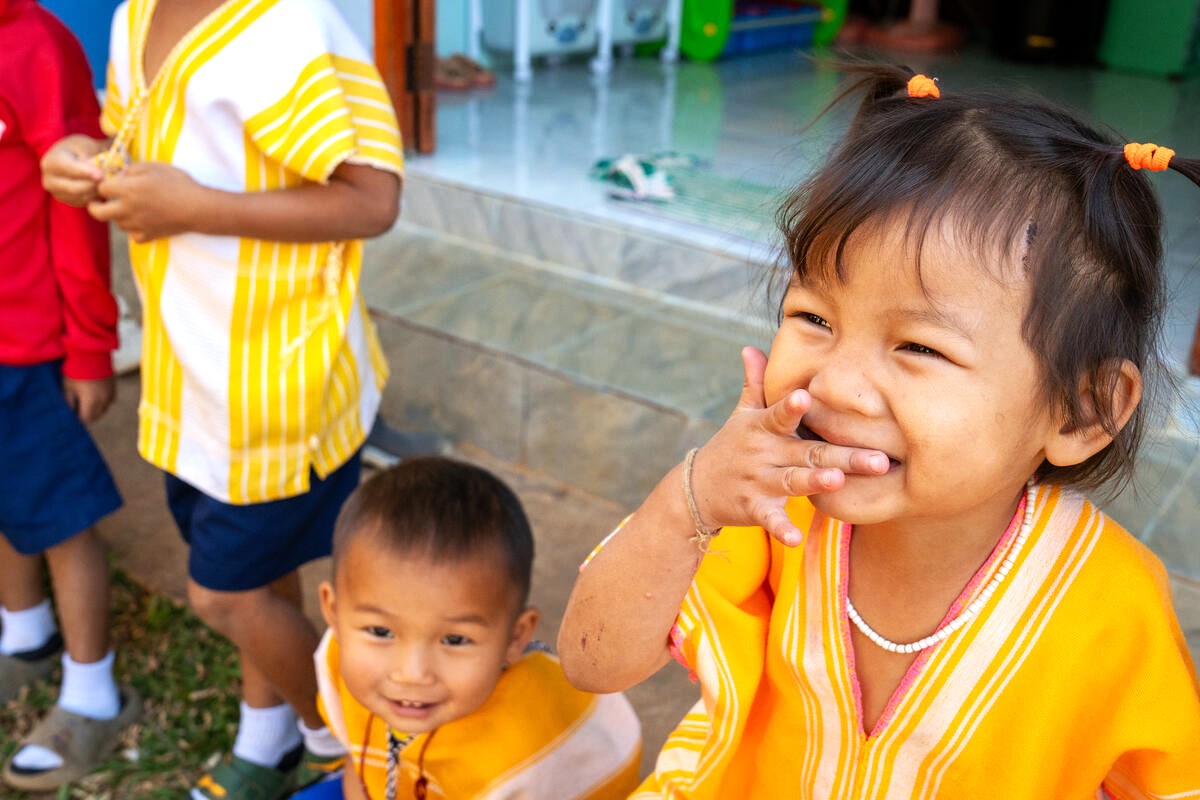
WHO called for renewed efforts to ensure every child in the South-East Asia Region benefits from life-saving vaccines after the latest estimates showed that, despite sustaining high routine immunization coverage in 2025, nearly 1.2 million children did not receive their first routine vaccine, and 600 000 remained only partially vaccinated, leaving them vulnerable to vaccine-preventable diseases.
“As we build on the high immunization coverage, we must focus on the children who are still being missed. Every zero-dose and partially vaccinated child represents inequity in access to essential health services and a missed opportunity to protect life. By focusing our efforts on underserved and hard-to-reach communities, we can close the remaining equity gaps and ensure that every child benefits from the life-saving protection that vaccines provide,” said Dr Catharina Boehme, Officer-in-Charge, WHO South-East Asia Region.
The latest WHO and UNICEF Estimates of National Immunization Coverage (WUENIC) 2025 showed the WHO South-East Asia Region as the highest performing among the six WHO regions, sustaining high routine immunization coverage across key childhood vaccines. Coverage with the third dose of diphtheria, tetanus and pertussis-containing vaccine (DTP3) remained at 94% in 2025, well above the global average of 85%.
Coverage with the first dose of measles-containing vaccine (MCV1) increased to 96% in 2025 from 95% in 2024. Coverage with the second dose of measles-containing vaccine (MCV2) increased to 93%, remaining well above the global average.
Despite these achievements, an estimated 1.2 million children in the Region did not receive the first dose of diphtheria, tetanus and pertussis (DTP) vaccine in 2025. While this represents a 65% decline from 3.3 million zero dose children in 2021 during COVID-19 pandemic, the reduction in number of zero dose children in 2025 was marginal – only around 23000 as compared to 2024. In addition, nearly 600000 children remained partially vaccinated in 2025, having not received all three recommended doses of DTP-containing vaccine.
Together, zero-dose and partially vaccinated children, predominantly concentrated in underserved, remote, conflict-affected and marginalized communities, along with susceptible children from previous birth cohorts, continue to leave significant immunity gaps, increasing the risk of and driving new outbreaks of vaccine-preventable diseases across the Region.
“Strengthening primary health care, using local data for tailored strategies to identify underserved populations, engaging communities and integrating immunization with other essential health services will be critical to close the immunity gaps and ensure no child is left behind”, Dr Boehme said.
The Officer-in-Charge emphasized the importance of achieving high, equitable coverage with both doses of the measles-containing vaccine to protect children, prevent outbreaks, and advance the Region’s goal of eliminating measles and rubella.
“The recent measles outbreaks in the Region, including in Bangladesh, underscore how quickly immunity gaps can lead to resurgence and spread of this highly infectious disease. These outbreaks serve as a reminder that ensuring timely vaccination of every eligible child is critical,” Dr Boehme said.
Across the Region, immunization programmes are increasingly adopting a life-course approach, extending protection beyond infancy and childhood to adolescents, adults and older people. Sustaining high coverage of tetanus-diphtheria (Td) vaccination among pregnant women remains essential to protecting both mothers and newborns against tetanus, while continued efforts to scale up human papillomavirus (HPV) vaccination will be critical to reducing the burden of cervical cancer and advancing the Region’s commitment to immunization across the life course, she said.
“Our priority now should be a targeted equity-focused approach to reach every child, protect communities and achieve the goals of Immunization Agenda 2030. At the same time, we must continue expanding access to vaccines across the life course so that everyone, at every stage of life, benefits from the protection that immunization offers,” Dr Boehme said.


Copyright © All right reserved to pahichan.com Site By: Sobij.
