
The debate over gender-affirming care for children has become one of the defining cultural battles of our time. Across North America and Europe, politicians, activists, doctors, parents, and advocacy groups are locked in fierce disagreement over whether minors should have access to puberty blockers, cross-sex hormones, and other medical interventions.
Conservatives warn that children are being rushed into life-altering decisions they cannot fully understand. Progressives argue that denying gender-affirming care puts vulnerable young people at risk and prevents them from living authentically.
Both sides accuse the other of harming children.
Yet beneath this highly polarized debate lies a deeper question that is rarely asked.
What if the problem is not the child?
What if the problem is the binary gender system itself?
The entire discussion takes place within a worldview that assumes there are only two legitimate genders: male and female. Conservatives insist that children should remain in the category associated with their biological sex. Progressives increasingly argue that some children belong in the opposite category and should be affirmed accordingly.
At first glance, these positions appear radically different. In reality, they share the same underlying assumption.
Both believe that every child must ultimately find their place within one of two boxes.
The disagreement is merely about which box.
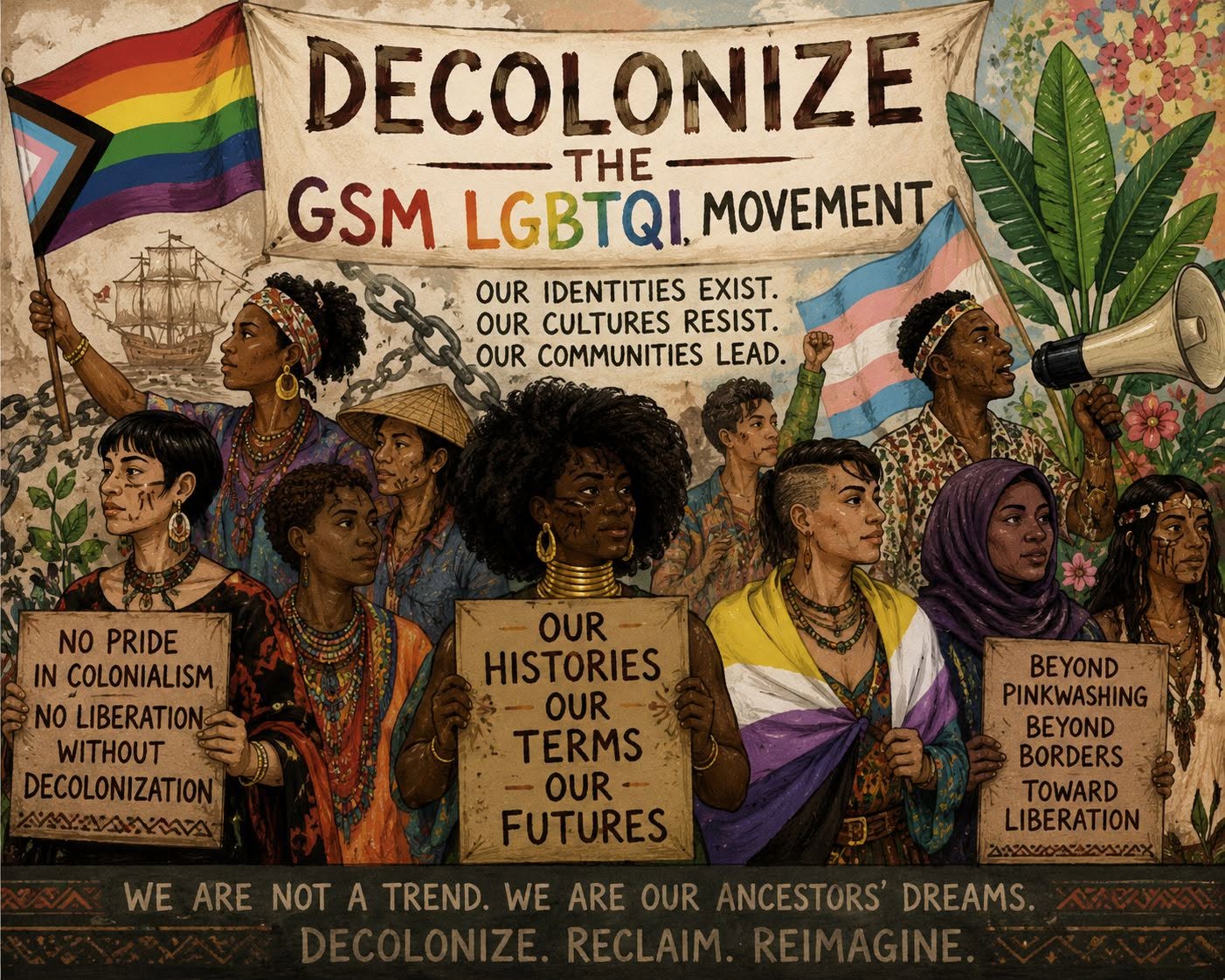
From the perspective of many pre-patriarchal, Indigenous, and Eastern traditions, this assumption is not only unnecessary but deeply misleading.
Long before modern Western medicine invented the concept of gender-affirming care, numerous cultures recognized that human beings do not always develop along strictly male or female pathways. Gender diversity was not viewed as a defect requiring correction, nor as evidence that a person belonged to the opposite sex. It was understood as part of the natural diversity of human existence.
Across Asia, the Pacific, Africa, and the Americas, societies developed social, spiritual, and cultural spaces for people who occupied identities beyond the male-female binary. While these traditions varied greatly, they shared a common insight: not everyone is destined to become a conventional man or a conventional woman.
This insight has largely disappeared from modern Western discourse.
Instead, children grow up surrounded by a binary worldview that categorizes every aspect of life into male and female. They are told that there are two genders, two developmental pathways, and two acceptable destinations.
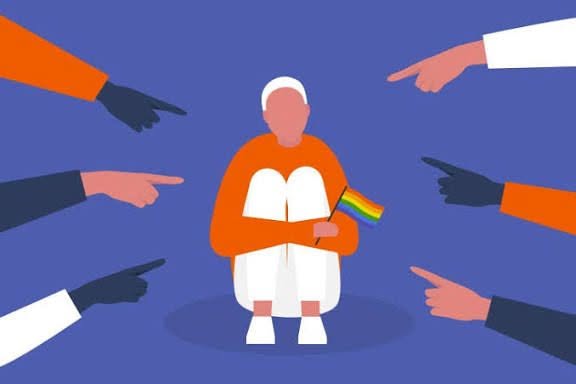
When a child does not fit comfortably within these expectations, distress often follows.
A boy who does not identify with conventional masculinity may feel alienated from the category “boy.” A girl who feels disconnected from conventional femininity may feel equally uncomfortable with the category “girl.”
Within a binary framework, these children are left with only two apparent choices. They must either force themselves to conform to their assigned gender or cross over into the opposite one.
The possibility that they may belong to neither category—or to a broader spectrum of gender diversity—is rarely presented as a meaningful option.
This is why the contemporary concept of gender affirmation deserves closer scrutiny.
Despite its progressive language, gender affirmation often remains rooted in the same binary assumptions that have dominated Western societies for centuries. A boy distressed by masculinity is affirmed as a girl. A girl distressed by femininity is affirmed as a boy.
The binary is not challenged.
It is reinforced.
The child is simply moved from one side to the other.
This raises an uncomfortable possibility. What is commonly described as gender dysphoria may often arise not because the child’s body is wrong, but because the culture offers too few legitimate ways of being human.
When children are taught that there are only two genders, those who do not fit either category naturally experience confusion and distress. They are searching for themselves within a map that does not contain their destination.
The distress is real.
But its source may be misunderstood.
A child who feels uncomfortable being pressured to act/pretend like a boy (as his being is different) does not automatically need to become a girl. A child who feels uncomfortable being pressured to act/pretend like a girl (as her being is different) does not automatically need to become a boy. They may simply be developing along a different gendered pathway that the dominant culture has failed to recognize.
From this perspective, many contemporary approaches risk treating the symptoms while ignoring the cause.
Instead of expanding society’s understanding of gender diversity, they often encourage children to relocate within the same binary system that generated the distress in the first place.
This concern becomes especially important during adolescence.
Puberty is a period of profound physical, emotional, psychological, and social transformation. Young people are exploring identity, belonging, sexuality, and self-understanding. In a culture that recognizes only two genders, any deviation can appear to require a dramatic solution.
If a teenager is taught that there are only two possible destinations, they may feel compelled to choose one.
If they are taught that human development can take many forms, they may experience their journey very differently.
The tragedy of the current debate is that both conservatives and progressives remain trapped within the same conceptual framework.
One side seeks to keep children in their birth-assigned category.
The other seeks to help some children move into the opposite category.
Neither seriously asks whether the categories themselves are too narrow.
Neither seriously considers whether a broader understanding of gender diversity might reduce the very distress that fuels the demand for medical intervention.
This is the missing question in the Western debate.
Before asking whether children should transition, perhaps society should ask why children are taught that only two gender destinations exist in the first place.
The most compassionate response to gender-diverse children may not be to insist that they remain who they were assigned to be. Nor may it be to encourage them to become the opposite.
It may be to recognize that human diversity has always been greater than the binary allows.
Perhaps the real affirmation that children need is not affirmation as male or female.
Perhaps they need affirmation that there are many ways of becoming human.






Copyright © All right reserved to pahichan.com Site By: Sobij.
